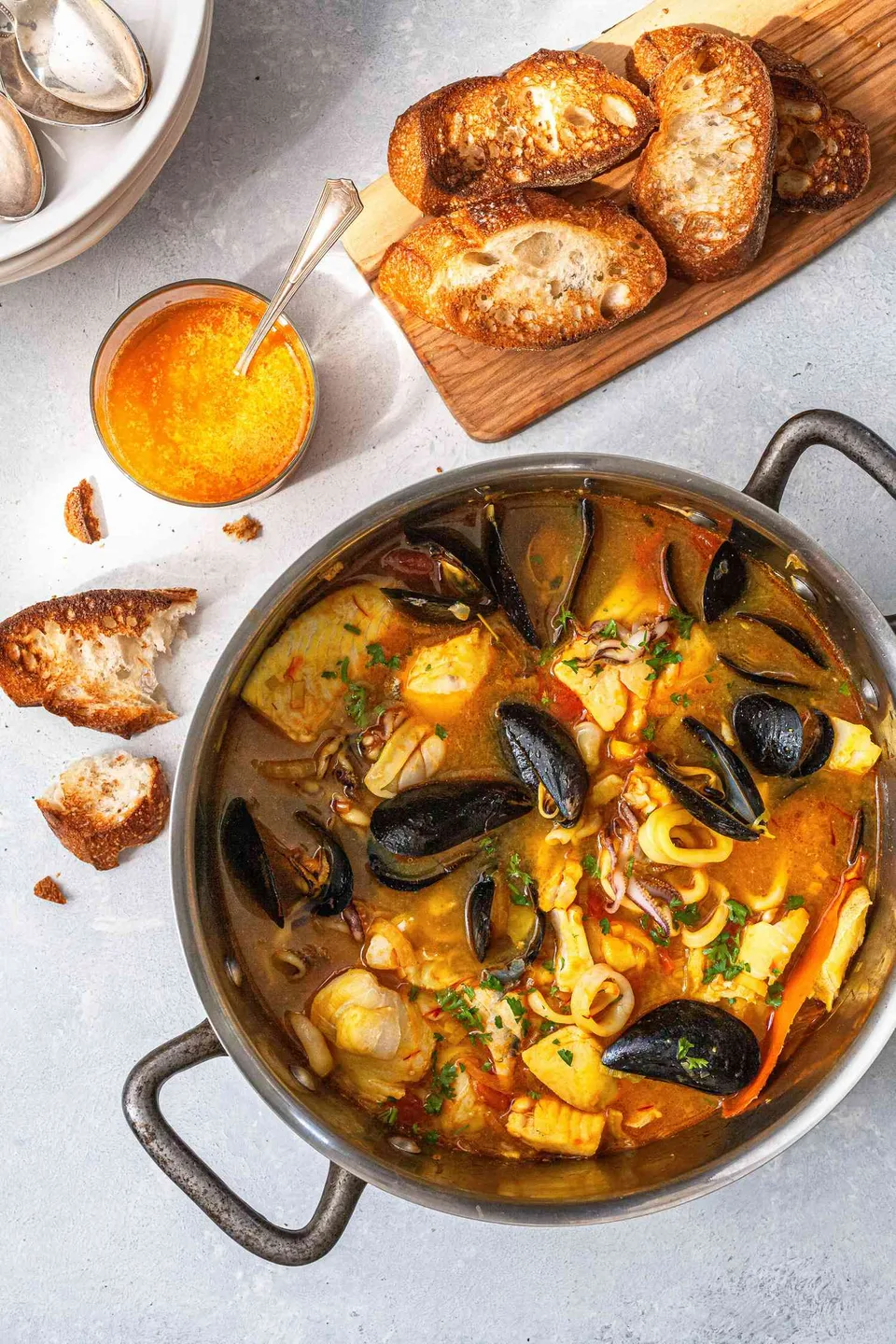
Ingredients
Bouillabaisse broth
Rouille
To serve
Method
- Heat the broth olive oil in a large pan over medium heat. Cook the fennel for 3–4 minutes without colouring it. Add red peppers, sea salt, tarragon and crushed black pepper and cook another 2–3 minutes.
- Add fish bones and tomatoes. Cover with water to the source’s stated depth of 2.5 cm and bring to a simmer. Skim surface scum, then add tomato paste and saffron. Return to a simmer and cook 90 minutes until reduced by about one-third, skimming again from time to time.
- Blend smooth with a stick blender. Pass through a fine sieve, pressing solids with a ladle to extract liquid, then through a fine chinois without pressing. Add lemon juice, blend again with butter, check seasoning and pass through a fine sieve once more. Chill until needed.
- For rouille, whisk egg yolks with salt, pepper, lemon juice, saffron and cayenne. Add both oils in a thin stream, whisking continuously. Stir in garlic and loosen with a little warm water if needed. Set aside.
- Peel and deseed the serving tomato and finely chop its flesh into a concasse. Cut salmon, pollock and monkfish into 50 g pieces and season lightly. Cut each sardine fillet in half.
- Measure 500 ml prepared broth into a pan and bring to a simmer. Whisk in 30 g prepared rouille; the rest of both batches is not used in this finishing stage.
- Add monkfish and cleaned mussels and poach 3 minutes. Add salmon and pollock and cook gently another 7–8 minutes.
- Add sardine pieces and cook 2 minutes. Stir in basil, tarragon, chives and tomato concasse. Serve immediately.
Equipment
Large broth saucepan; Stick blender; Fine sieve; Ladle; Fine chinois; Blender; Rouille bowl and whisk; Seafood saucepan; Knife and chopping board
Notes
- Straining: press the first sieveful to extract the liquid, then pass through the fine chinois without pressing. After blending in lemon juice and butter, pass through a sieve again.
- Component batches: use 500 ml of the prepared broth and 30 g of the rouille for the final cooking stage. Both recipes make more than this; their full finished yields are not supplied.
- Rouille texture: whisk in the oils in a thin stream and loosen with warm water only if needed. The source lists four garlic cloves but leaves their preparation unspecified.
- Poaching order: monkfish and mussels cook first, salmon and pollock next, and sardines last. Follow the separate times rather than adding all the seafood together.
- Serving: offer fish and broth separately or together in one bowl. Serve immediately once the herbs and tomato have been added.
- Time allowance: the source gives 3 hours 15 minutes without a prep/cook split. It also asks for the broth to be chilled, without stating how long this takes.
Photos
1 photo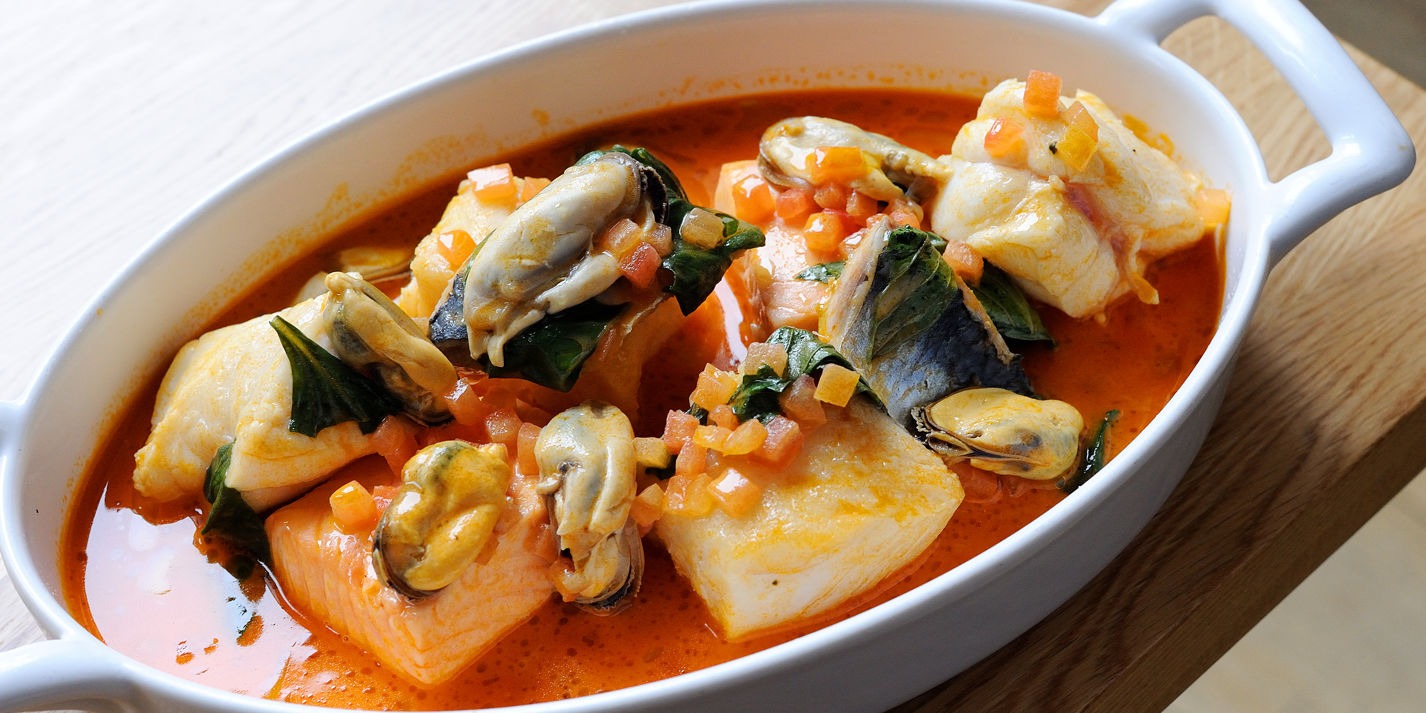
About this dish
Marseille’s bouillabaisse began as a fishermen’s family meal, using fish set aside from the day’s catch. From that simple pot grew a dish closely bound to the city’s identity. Its name is commonly explained as a reminder to lower the heat once the broth boils. Traditional service gives the fish and broth their own dishes, with rouille or aïoli alongside; the diner can bring them together in the bowl.
Aikens prepares his broth before the fish goes in, simmering bones with vegetables, tomato and saffron. Blending draws their flavour into the liquid, while careful straining leaves it smooth. Butter is blended in, then a little rouille enriches the portion used for poaching. Monkfish and mussels go first, followed by salmon and pollock, then sardines. This sequence gives each its own cooking time. The final herbs and tomato concasse add freshness to a concentrated broth.
Recipe and cooking notes adapted from Great British Chefs.