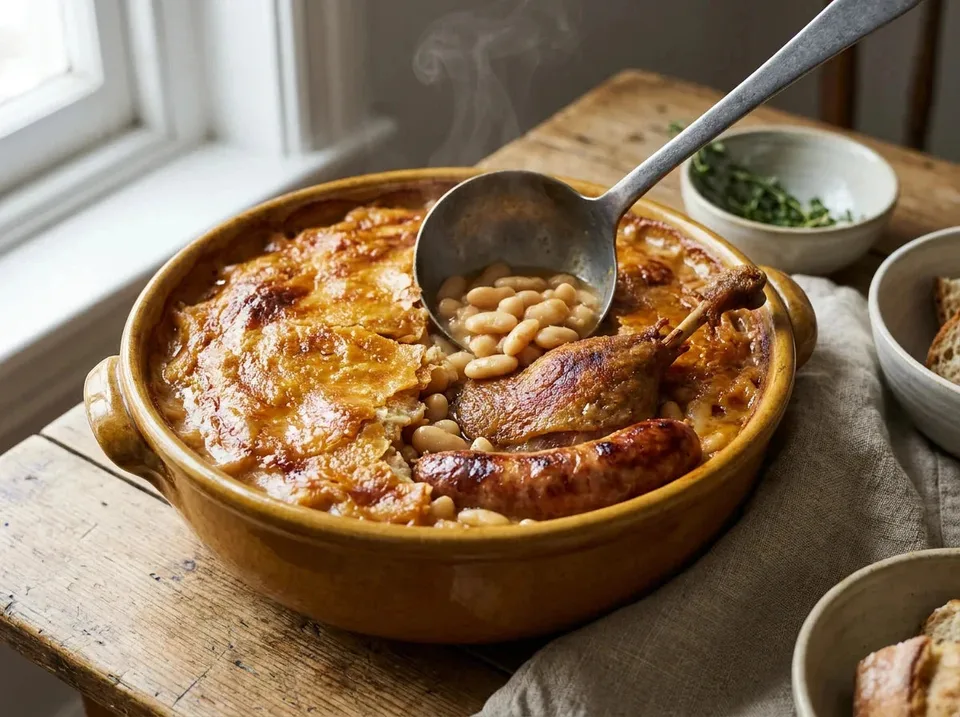
Ingredients
Beans, meats and broth
Method
- The night before, soak the dried beans in cold water.
- Drain. Put the beans in 3 litres cold water, bring to the boil for 5 minutes, then turn off the heat, drain and reserve.
- Make the broth with a fresh 3 litres water, the pork rind in broad strips, a poultry carcass or bones, and onions with optional cloves and carrots to taste. Season with salt and pepper. Cook at least 1 hour, strain and retain the rind.
- Cook the beans in the strained broth for about 1 hour, until tender but still whole.
- While the beans cook, warm the confit gently in a large sauté pan to render its fat and lift it out. Brown the sausages in that fat, then brown the pieces of pork. Reserve the meats and their cooking juices.
- Drain the beans and keep the broth hot. Crush a few garlic cloves with approximately 100 g salted pork fat and mix into the beans.
- Line a deep earthenware cassole with cooked pork rind. Add about a third of the beans, the meats, then the rest of the beans. Push the sausages into the beans; the source’s standard instruction leaves their tops visible, while its author says he prefers them covered.
- Add hot broth and meat juices just to cover the beans. Grind pepper over the surface and add 1 tablespoon of the rendered confit fat.
- Bake at 150–160°C /302–320°F for 2–3 hours. Push the golden-brown crust down several times during cooking and add a few spoonfuls of broth when the top begins to dry.
- Serve bubbling in the cassole, portioning gently without stirring.
Equipment
Large saucepan; Broth pot; Strainer; Large sauté pan; Deep earthenware cassole or ovenproof earthenware dish
Notes
- Beans: soak overnight, blanch, then cook in the strained broth until tender but still whole. Keep the broth hot for assembly and topping up.
- The crust: push it back into the cassoulet several times as it forms. The old saying is seven times; use the surface and moisture as your guide rather than treating this as a timed schedule.
- Sausages: the main source instruction leaves their tops showing, but the writer personally prefers them covered by beans. Both choices remain in the selected Method.
- Moisture: add a few spoonfuls of hot broth whenever the top begins to dry. Keep the meat juices for the cassole too.
- Making ahead: the publisher recommends preparing it the day before, then reheating at 150°C for 1½ hours. Add broth, or a little water if necessary, so it stays moist.
- Serving: bring the cassole to the table bubbling. Lift out portions gently without stirring the entire dish.
- Timing: allow an overnight start. The source gives more than 24 hours total and more than 2 hours preparation, with a 2–3-hour oven stage; it does not give a single exact preparation/cooking total.
Photos
2 photos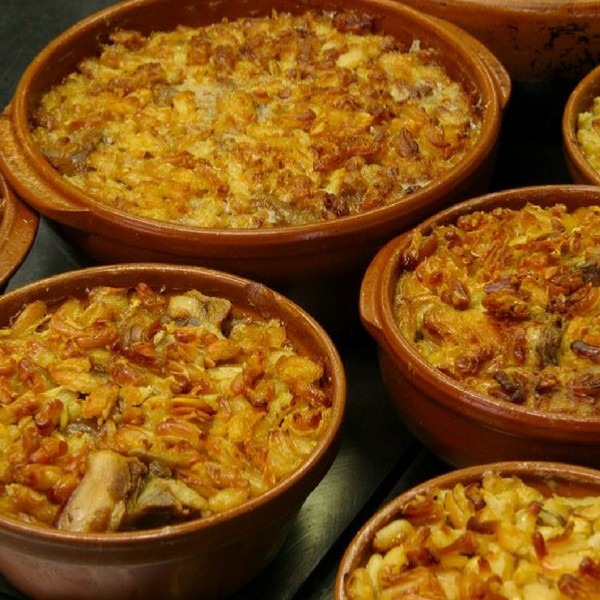
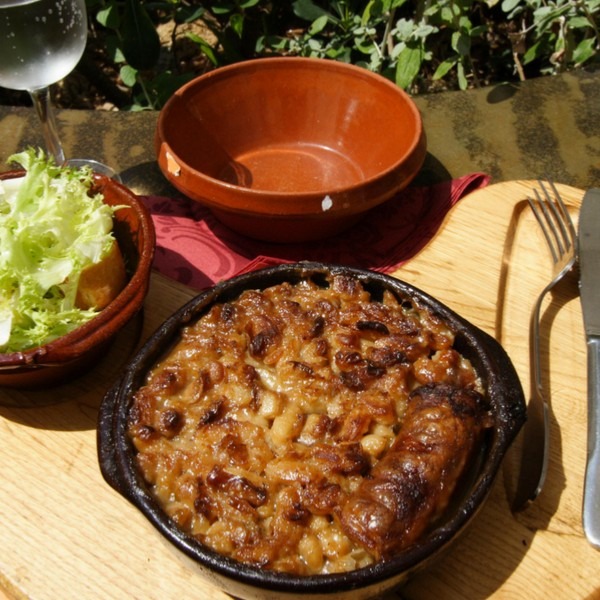
About this dish
Cassoulet takes its name from the earthenware cassole in which it cooks. Castelnaudary, Carcassonne and Toulouse each defend their own version of this southern French dish, but Castelnaudary's story is particularly spirited. Legend has it that, during the Hundred Years' War, the besieged townspeople pooled their remaining pork, bacon, broad beans and other provisions to feed the soldiers. Fortified by the stew, the defenders drove the English away.
Today's white beans arrived in France later, in the sixteenth century. Earlier stews used broad beans, linking the modern cassoulet to a long tradition of slowly cooked meat and pulses.
The Hôtel de France version layers lingot beans, confit, sausage and pork over cooked rind. Broth and the juices from browning the meats carry flavour into the beans. The golden crust is pushed beneath the surface as it forms, traditionally seven times. This patient cooking and the cassole itself matter as much as the abundance of meat.
Recipe and cooking notes adapted from Cassoulet.com / Hôtel de France.