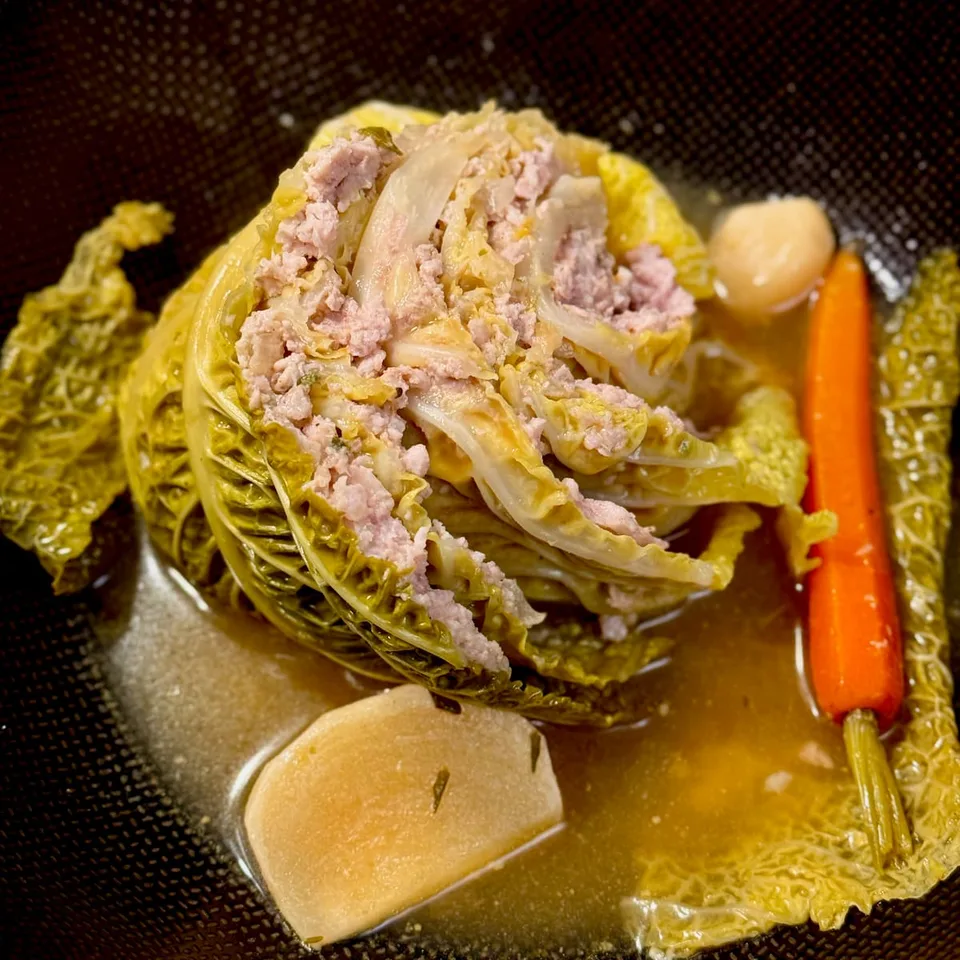
Ingredients
Ingredients
Method
- Gently sauté chopped onion and stuffing garlic in olive oil until translucent; cool.
- Mix minced pork and belly with sage, nutmeg, seasoning and cooled onion mixture. Stir in eggs as directed in the source article.
- Discard tough outside cabbage leaves and trim root. Remove leaves and keep them in size order; leave the little yellow leaves attached to the heart.
- Blanch leaves in salted boiling water for about 30 seconds in batches of five or six; blanch heart 2 minutes. Drain and gently dry.
- Spread stuffing over the smallest leaves first and rebuild around the heart, adding larger leaves until the cabbage regains its shape. Tie firmly with three lengths of string.
- Put broth garlic, carrots and turnip in the pot with stock, bay and thyme. Season and lower in the cabbage. Bring to the boil, lower heat, cover and simmer at least 90 minutes, spooning broth over it occasionally.
- Lift cabbage carefully by its strings onto a board. Remove string, cut into six portions and serve in soup bowls with broth and vegetables.
Equipment
Large cooking pot or cocotte with lid; Large mixing bowl; Slotted spoon; Kitchen string, 3 lengths; Sharp knife; Board that catches juices
Notes
- A medium Savoy cabbage is easiest to rebuild. Keep the leaves arranged by size and ask for another pair of hands if tying a larger head proves awkward.
- Pat the blanched leaves gently dry so the stuffing stays in place. Mix the two eggs into the meat filling to bind it.
- Use three lengths of kitchen string and pull them firmly to hold the round shape. Spoon stock over the top occasionally as the cabbage simmers.
- The long simmer takes at least 90 minutes. Allow extra time for blanching and the first sautéing stages beyond that cooking estimate.
- Minced beef or veal can replace pork. A shortcut for the original batch is 1 kg ready-made poultry or pork stuffing from a good butcher, or sausage filling removed from its skins. Smoked bacon or smoked pork belly adds depth and needs less salt.
- For oven cooking, cover the casserole with its stock and vegetables and bake at 180°C/350°F, or 160°C fan, for about 90 minutes. Baste occasionally with the broth.
- For smaller parcels, stack four leaves, add stuffing, roll tightly and tie. Cook in the broth for 20–25 minutes.
- Serve the wedges with broth and vegetables, plus crusty bread or potatoes. A light Alsace Pinot Noir or a more robust Morgon are the suggested wines.
- Seal leftovers in an airtight container and refrigerate for up to two days, or freeze for up to two months.
Photos
8 photos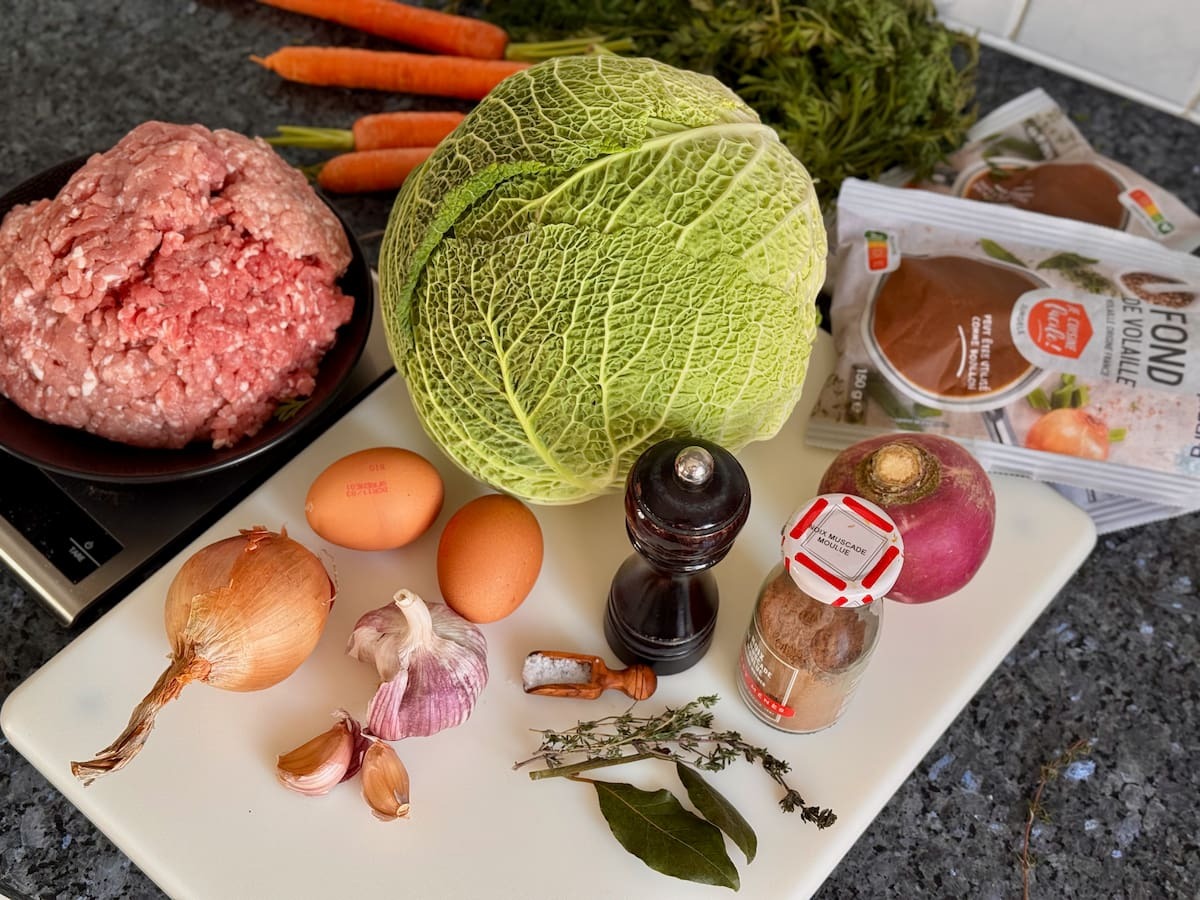 IngredientsSavoy cabbage and pork stuffing ingredients
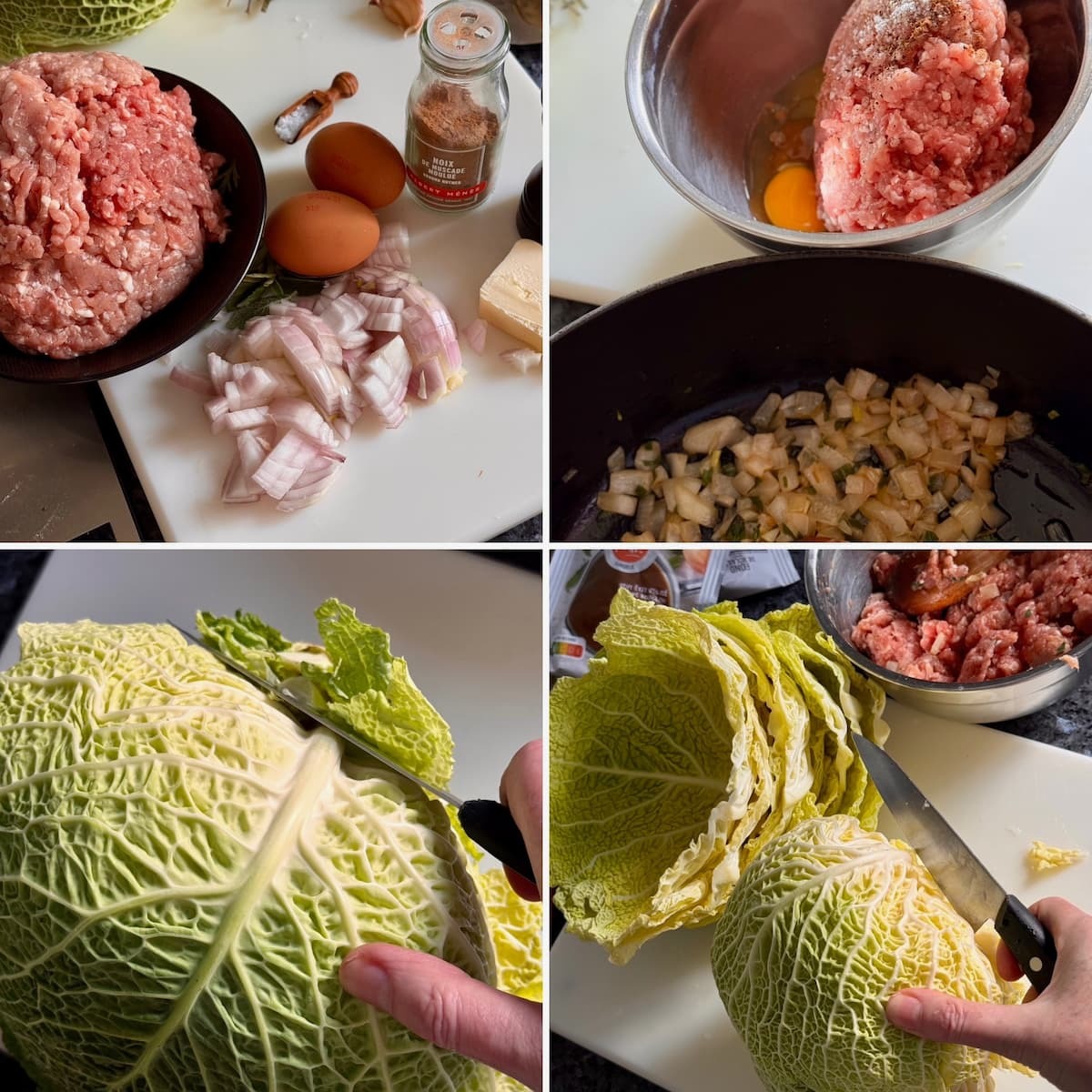 Steps 1–2 · OverviewMaking the pork stuffing
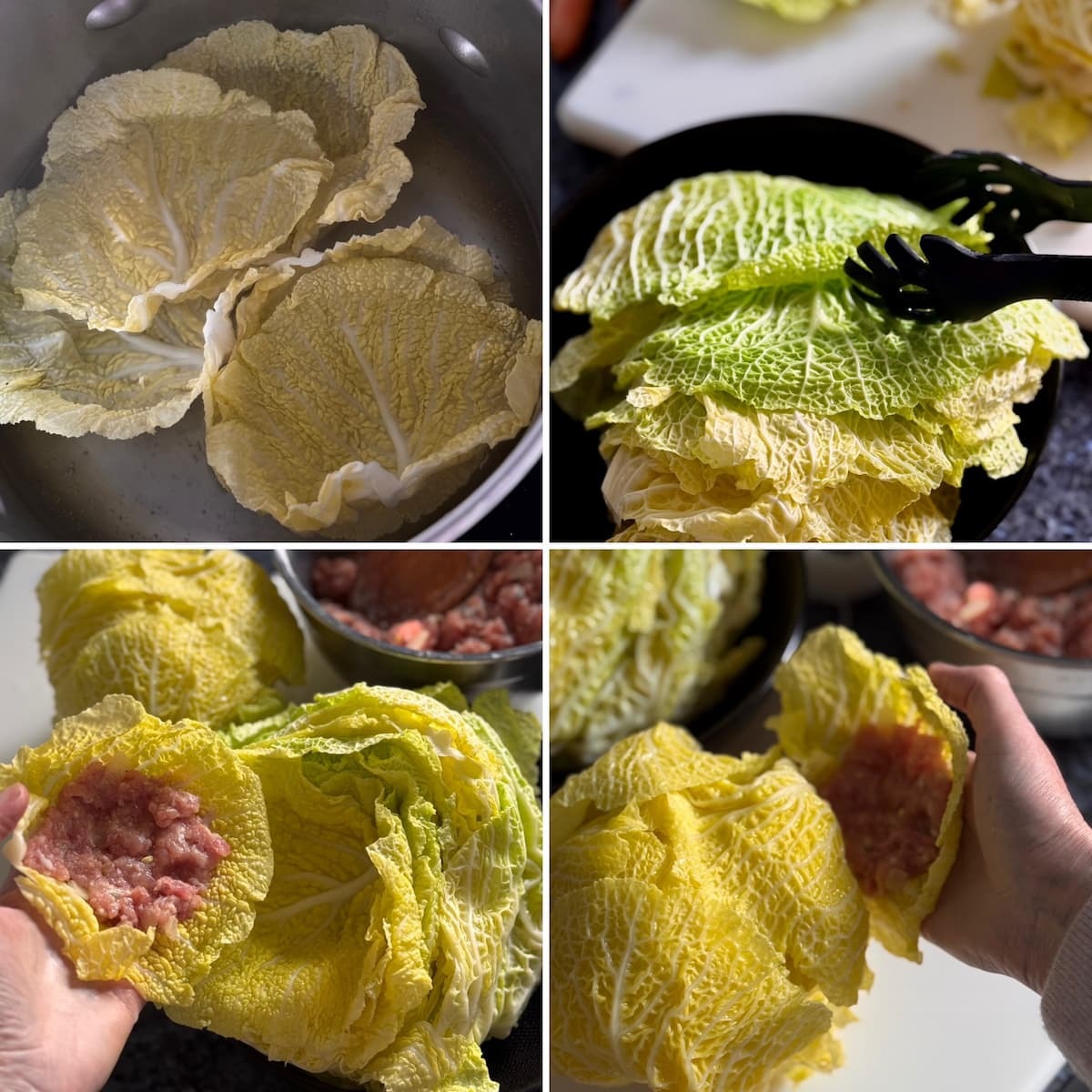 Steps 3–5 · OverviewBlanching leaves and rebuilding the cabbage
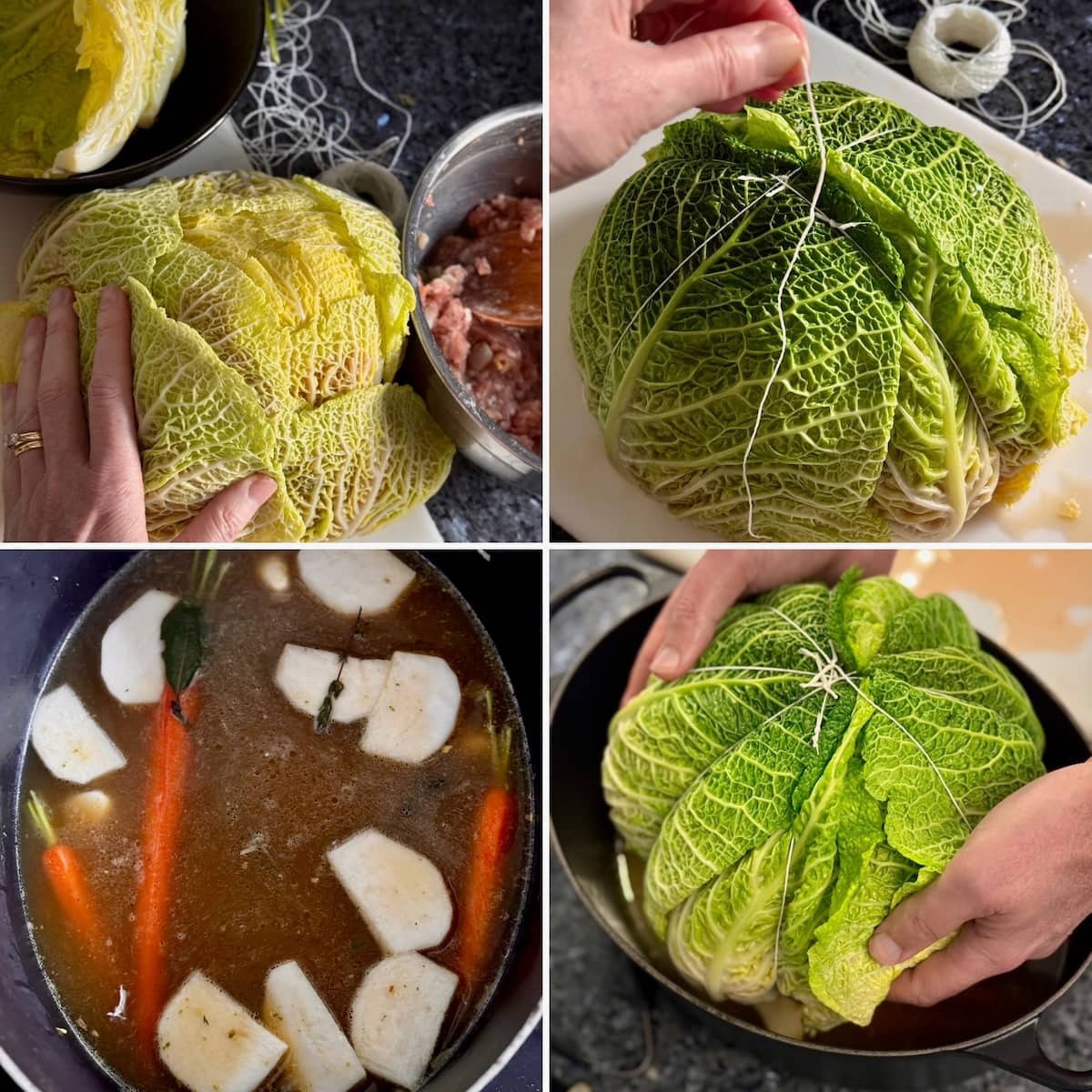 Steps 5–6 · OverviewCompleting the cabbage and preparing the broth
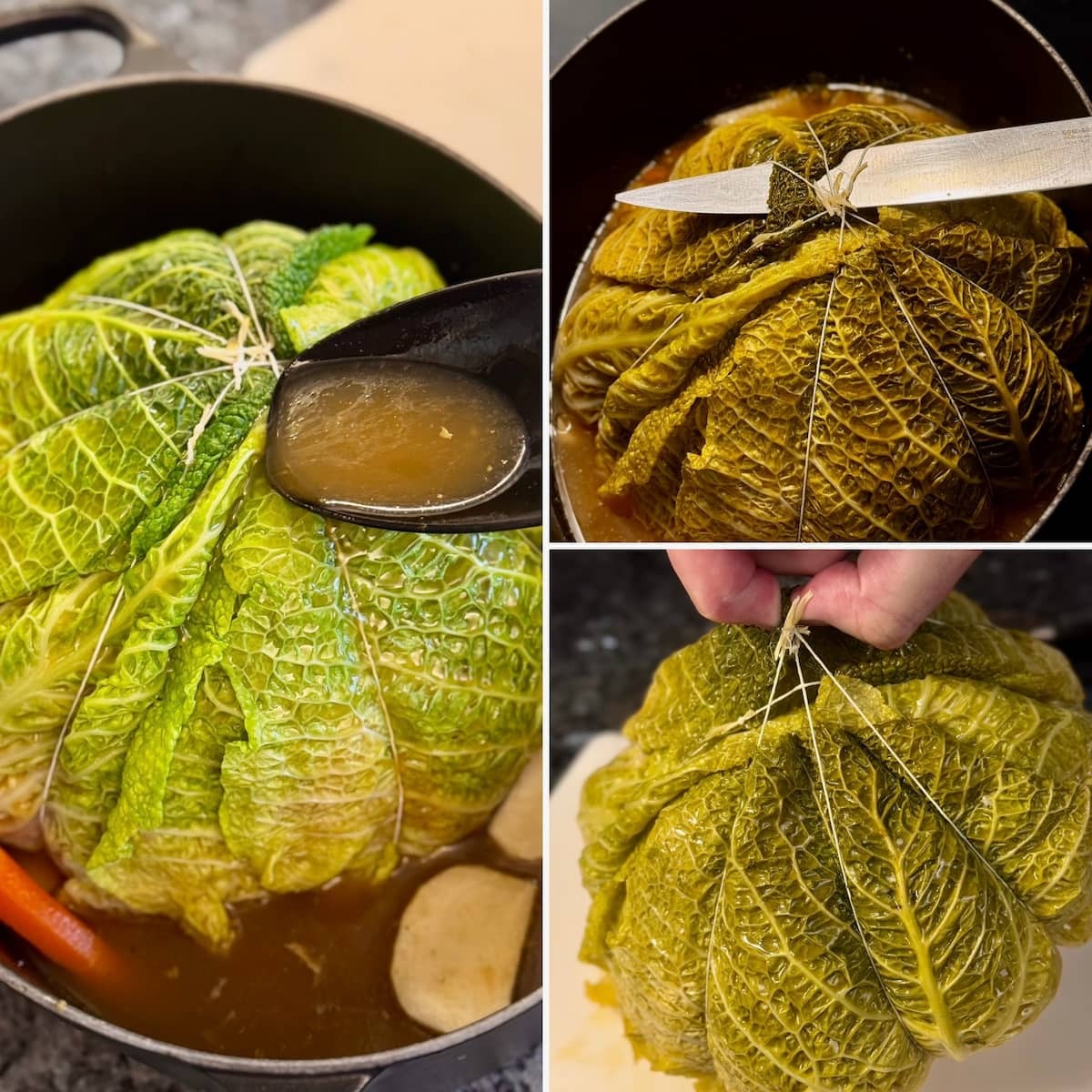 Steps 5–6 · OverviewTying and cooking the whole cabbage
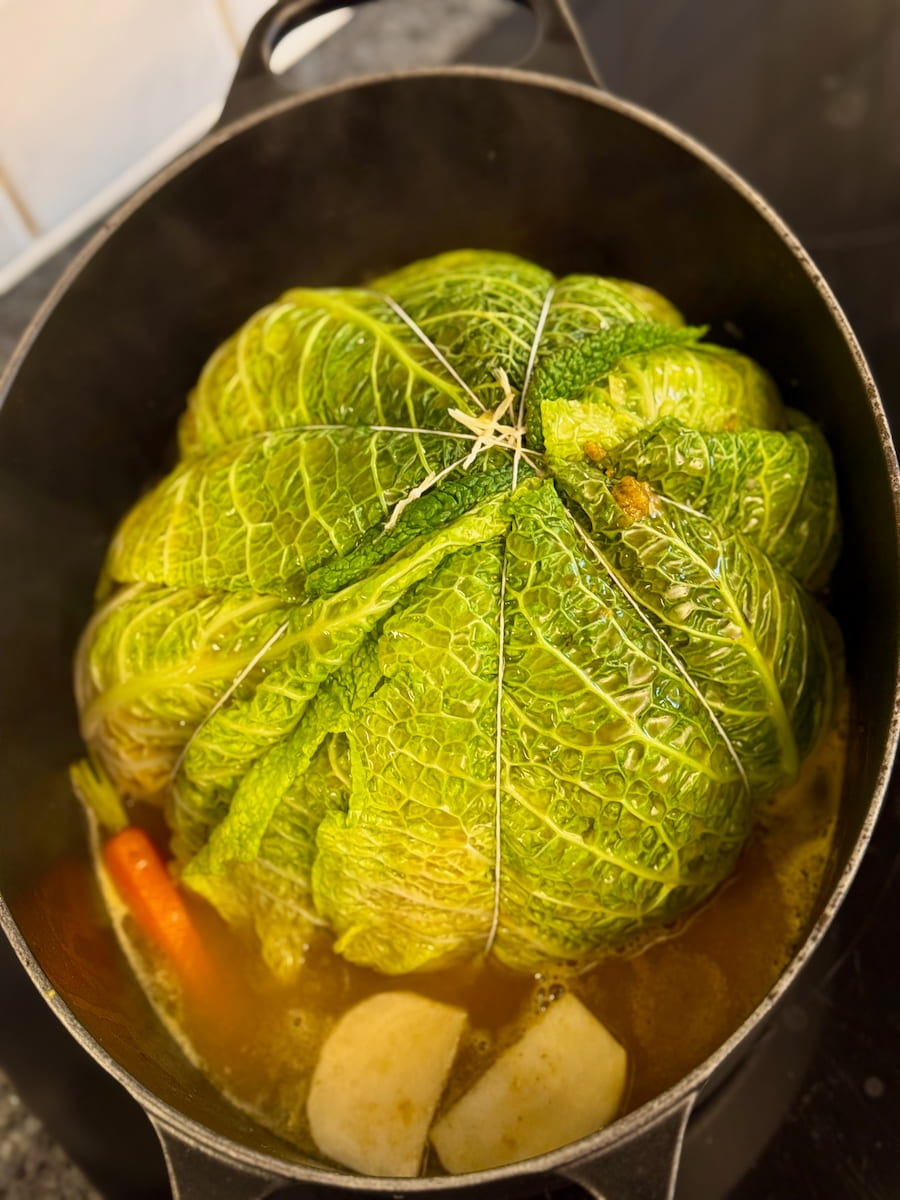 Step 6Whole stuffed cabbage in its broth
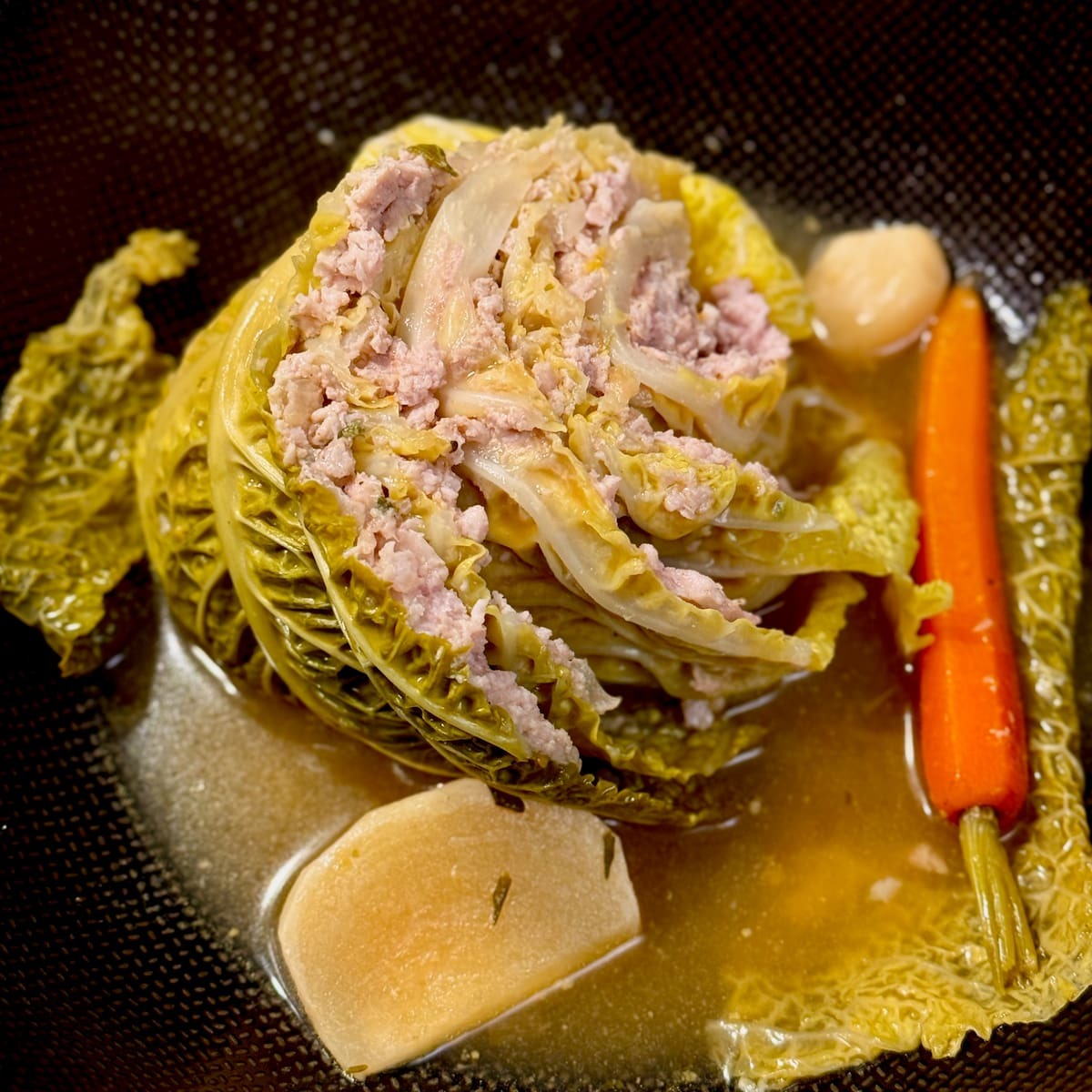 ServingA wedge of cabbage with pork and vegetables
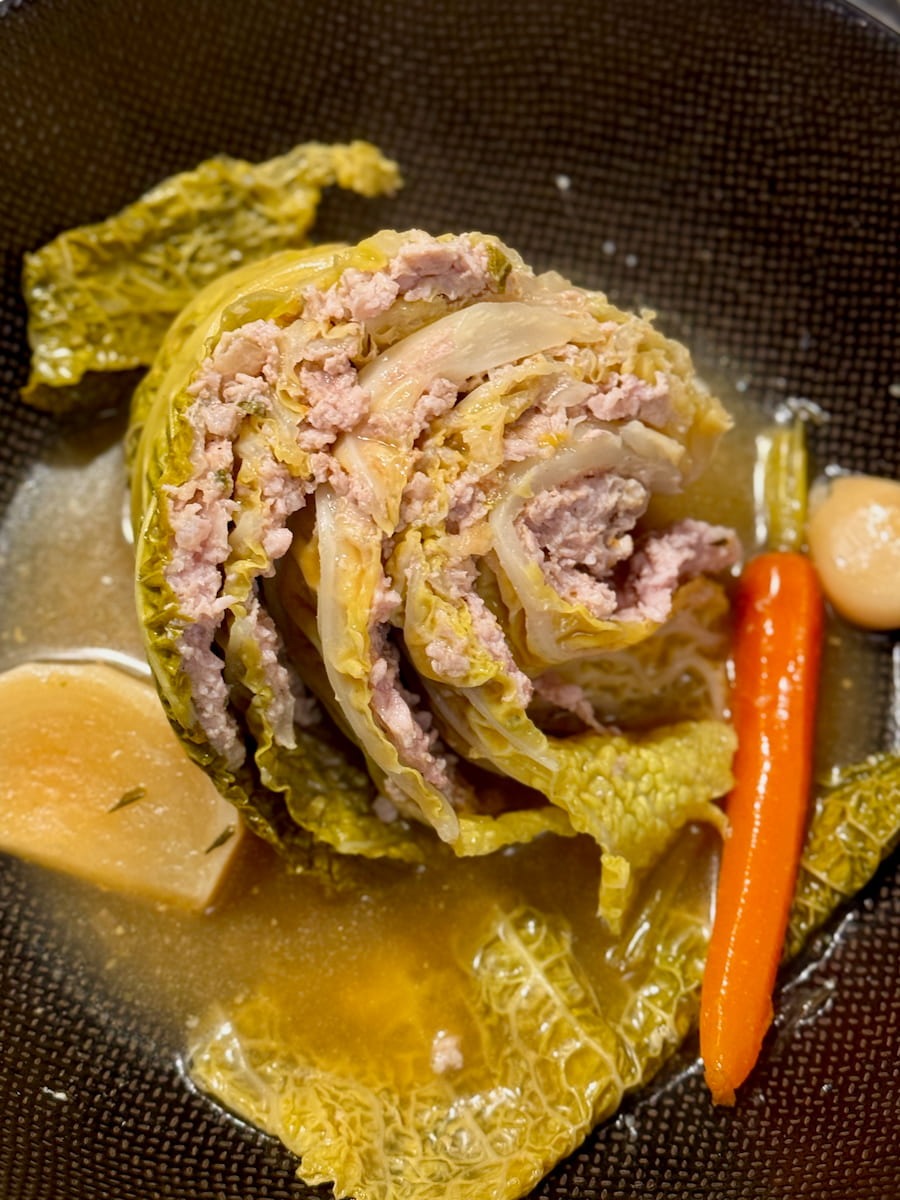 ServingSliced cabbage in the cooking broth
About this dish
Stuffed cabbage has a place in many French regional kitchens. In Aveyron, remembered preparations were cooked in a cast-iron pot in the oven or before the fire; other versions use tomato. Jill Colonna’s preferred style comes from Franche-Comté, gently poached in stock. She discovered it through Raymond Blanc’s Blanc Mange and keeps the cooking broth as part of the meal.
The whole cabbage is assembled around its heart, with a thin layer of stuffing on each leaf. Savoy’s flexible, crinkled leaves make it well suited to this treatment. Blanching softens them enough to fold into place, and drying them helps the pork filling adhere. The result regains the shape of a cabbage, held firmly with kitchen string.
Sage, nutmeg and softened onion season the pork; carrots, turnip, garlic and herbs flavour the stock around it. That gentle cooking gives each wedge tender leaves and a moist filling, with enough broth to serve it in a bowl.
Recipe and cooking notes adapted from Mad About Macarons.