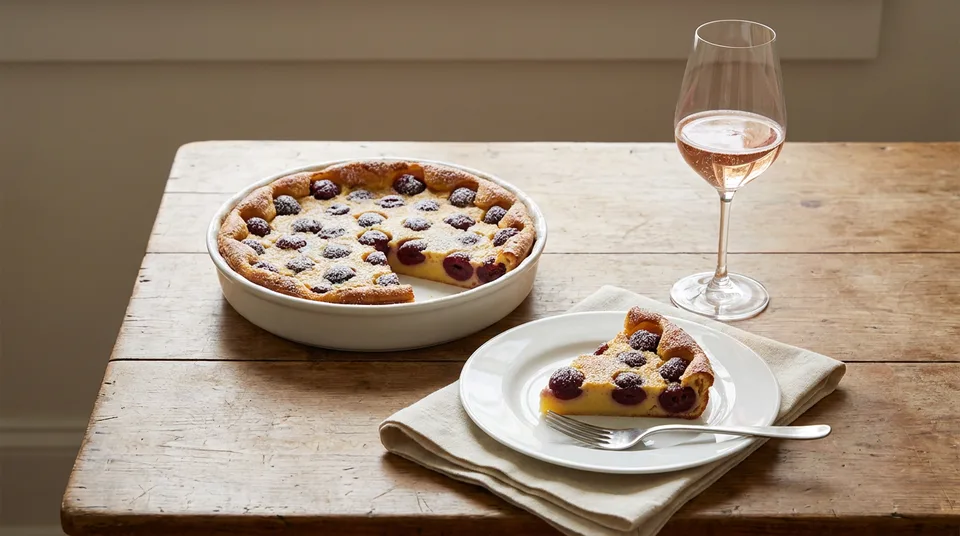
Ingredients
Clafoutis
Method
- Wash and stalk the cherries, leaving their stones in. Mix with half the caster sugar and macerate for at least 30 minutes.
- Heat the oven to 180°C / 356°F. Butter a 24 cm baking dish.
- Sift flour into a bowl; mix in salt and remaining caster sugar. Add beaten eggs, mix, then stir in the milk.
- Arrange cherries in the dish, pour over the batter and bake 35–40 minutes.
- Let the clafoutis cool until lukewarm, dust with icing sugar, then serve cold in its dish.
Equipment
24 cm baking dish or ovenproof porcelain mould; Mixing bowls; Sieve; Whisk; Oven
Notes
- Whole cherries: wash and stalk them, leaving the stones as directed. Let diners know before serving.
- Sugar: use half to macerate the cherries for at least 30 minutes and the other half in the batter.
- Dish and finish: the original six-person recipe uses a buttered 24 cm dish. Dust with icing sugar once lukewarm, then serve cold in that dish.
- Allow extra time: baking takes 35–40 minutes in the Method, despite the 35-minute headline. The half-hour maceration and cooling are additional; no cooling duration is given.
- Mirabelle alternative: use mirabelles in the same preparation and add 3 cl of mirabelle eau-de-vie to the mixture for the original batch.
Photos
1 photo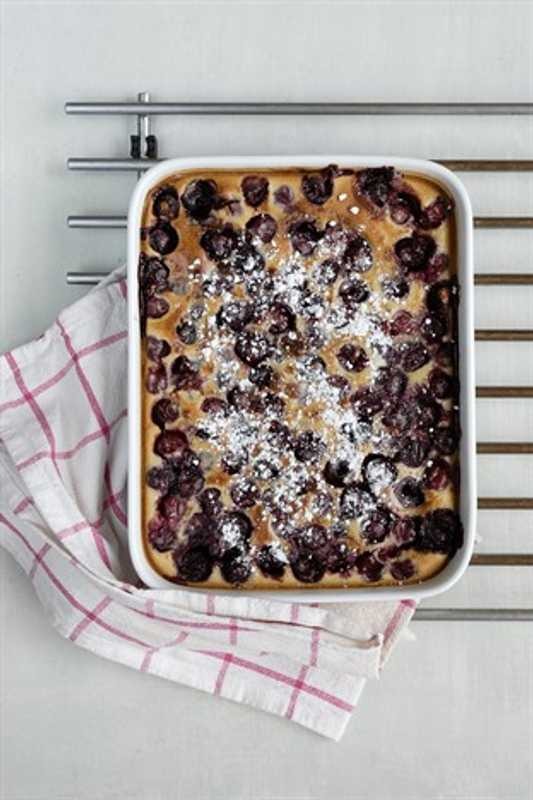
About this dish
Clafoutis is closely associated with the Limousin, where black cherries fill a simple mixture of eggs, milk, flour and sugar. Its dialect name derives from clafir, to fill. Regional cooking gives apples and pears a related home in flognarde, the autumn counterpart to the cherry dessert.
The batter is poured directly over the fruit in a buttered dish. As it bakes, it sets around the cherries with the texture of a flan. This Larousse version begins by leaving the cherries with half the sugar for at least half an hour, then uses the remaining sugar in the batter. The whole fruit keeps its stones, a choice that needs to be mentioned when serving.
The final handling is equally simple: a dusting of icing sugar as the dessert cools, then cold service in the dish it was baked in. The fruit remains the main decoration, with no pastry case or separate sauce to prepare.
Recipe and cooking notes adapted from Éditions Larousse.