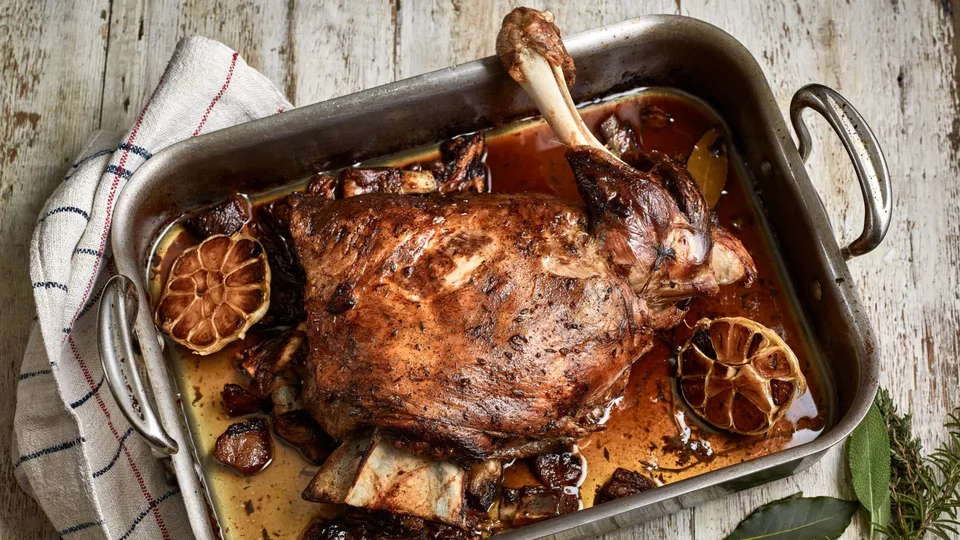
Ingredients
Lamb and jus
Method
- Score lamb lightly; rub with salt, pepper, rosemary, sage and olive oil. Marinate for 1 hour. Blanc also says the meat should be out of the fridge for at least a couple of hours before roasting.
- Heat oven to 230°C (446°F). Heat rapeseed oil in a large heavy roasting pan over medium heat. Lightly colour the bones and trimmings for 7–10 minutes, turning occasionally. Add garlic and brown for 3 minutes, then remove the pan from the heat.
- Set shoulder on bones; roast 20 minutes. Meanwhile boil wine for 30 seconds; add hot water, bay and thyme.
- Baste lamb; skim excess fat. Add wine mixture, loosening pan deposits. Loosely cover with foil; reduce oven to 150°C (302°F).
- Roast 4 hours, basting every 30 minutes, until yielding. Add extra hot water if jus dries out.
- Rest lamb while straining and skimming jus. Reheat jus; adjust seasoning and serve.
Equipment
Heavy roasting tray large enough for shoulder; Foil; Fine sieve; Small saucepan
Notes
- Before roasting: allow one hour for the herb marinade. Blanc also asks for at least a couple of hours out of the fridge before cooking. Include that lead time when planning; the headline total does not fully account for it.
- Bones: stop at a light golden colour. Taking them too dark can give the jus a bitter taste.
- During the slow roast: baste every 30 minutes. If the pan juices have reduced right down, extend them with about 100 ml water.
- At the end: rest the shoulder while straining and skimming the jus. No exact resting duration or oven mode is specified.
- Accompaniments and variation: serve potato and turnip gratin with braised seasonal vegetables. Turnip, parsnip, butternut squash and celeriac are Blanc’s suggestions. For his spiced rub, replace the herbs with cumin and coriander seeds; no amounts are given for the spices.
Photos
1 photo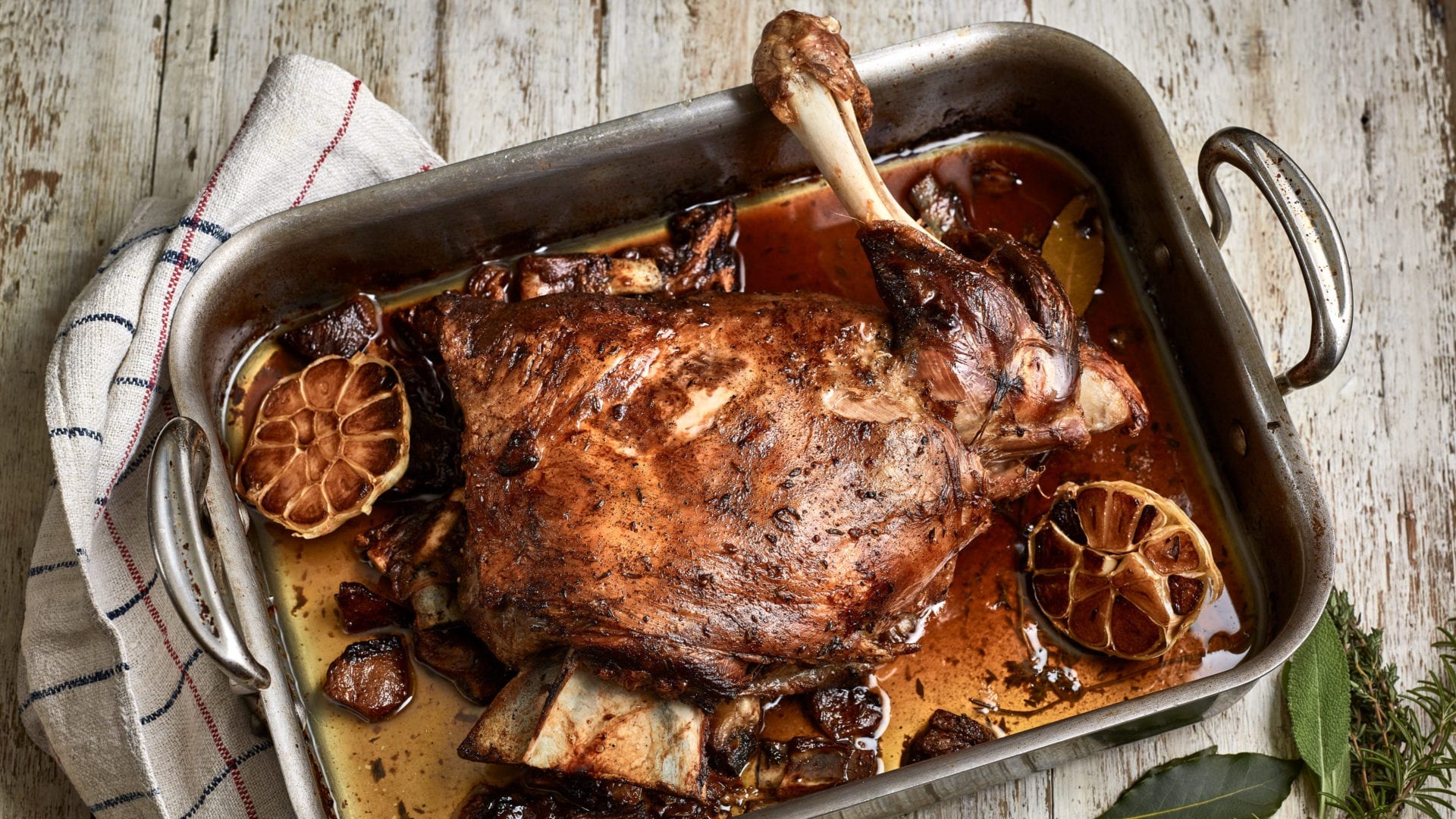
About this dish
A shoulder of lamb roasted with rosemary is a familiar French family lunch, with sage or savory among its traditional herb variations. Blanc gives this traditionally less expensive cut the long cooking it rewards. In Kitchen Secrets, he links the sauce to Maman Blanc’s kitchen: her gravy began with the meat’s cooking juices, water, herbs and a little wine. Prepared stock was never needed.
The separate bones and trimmings are part of that approach. Browning them lightly builds the base of the jus, and piling them beneath the shoulder lifts the meat clear of the tray. Heat can circulate around the joint without its underside drying against the metal. Wine and water gather the caramelised juices during the slow roast. Straining and skimming give a clear sauce at the end, with the joint resting while the jus is reheated.
Recipe and cooking notes adapted from Raymond Blanc.