Ingredients
Ingredients
Method
- Peel the whole lime, removing white pith. Cut segments between membranes over a bowl to catch juices. Keep the core; cut segments into two or three pieces and set aside.
- Melt butter over medium heat. Sweat shallots 3–5 minutes, add tomato and one garlic clove for another minute. Add 1 teaspoon sugar, bay and 2 teaspoons vinegar; cook about 5 minutes until caramelised.
- Add caught lime juice, squeeze in the core and add it to the pan. Reduce away the liquid. Add port and reduce by half, then vermouth and parsley and reduce by half again.
- Add one thyme sprig and stock. Simmer gently about 1 hour until flavour and consistency suit. Check midway and at the end, adjusting with lime juice and sugar if needed. Strain through a fine sieve and reserve.
- For onions, melt half a tablespoon clarified butter over medium heat. Cook sliced onions 3–5 minutes until translucent, add remaining garlic and thyme and cook about 5 minutes until edges brown. Add seasoning, half a teaspoon sugar and remaining teaspoon vinegar; cook about 5 minutes until caramelised but still moist. Taste, adjust and reserve.
- Steam, microwave or blanch baby leeks until al dente; season and reserve.
- When ready to serve, heat oven to 220°C. Reheat mash, onions and sauce. Melt another half tablespoon clarified butter in a frying pan, add leeks and 2 tablespoons water or stock and toss. Simmer gently until glazed and hot.
- Melt remaining half tablespoon clarified butter in an ovenproof frying pan over medium-high heat. Season liver, optionally dust with flour and shake off excess. Sear 30 seconds on each side, then put pan in oven for 2–4 minutes depending on thickness. Warm lime pieces gently in a small pan for about 1 minute.
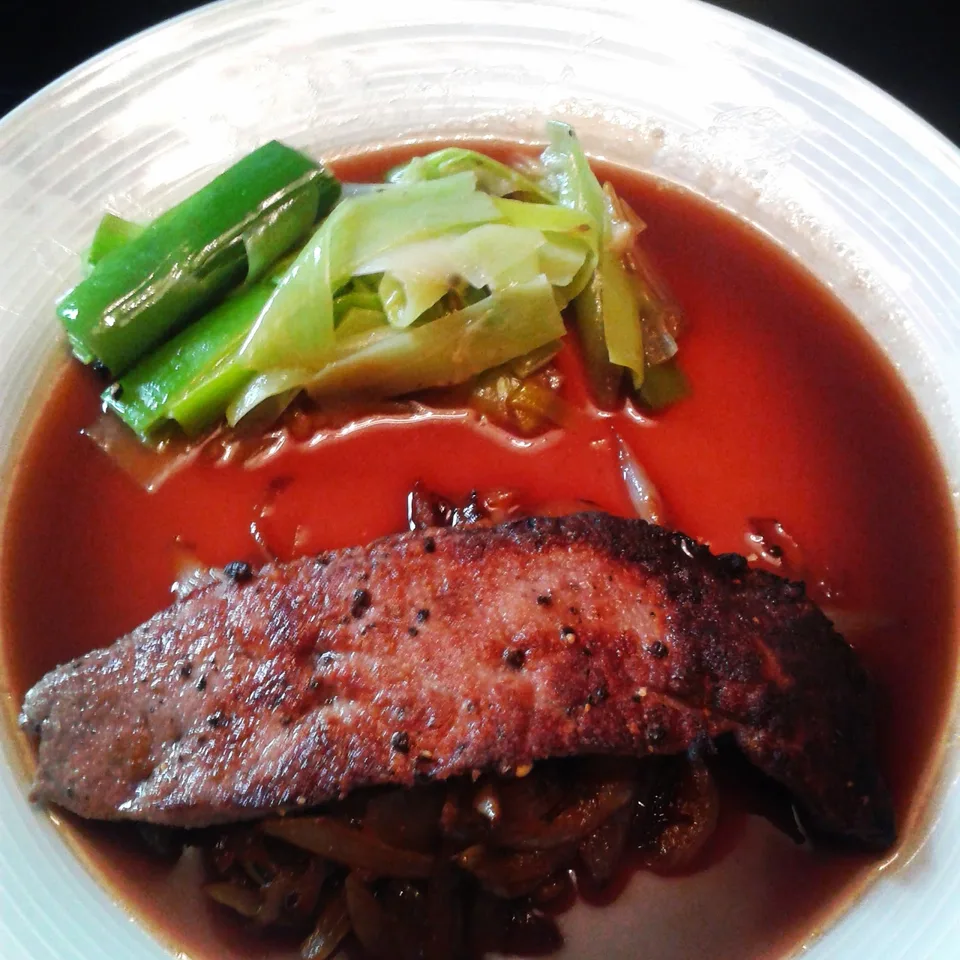
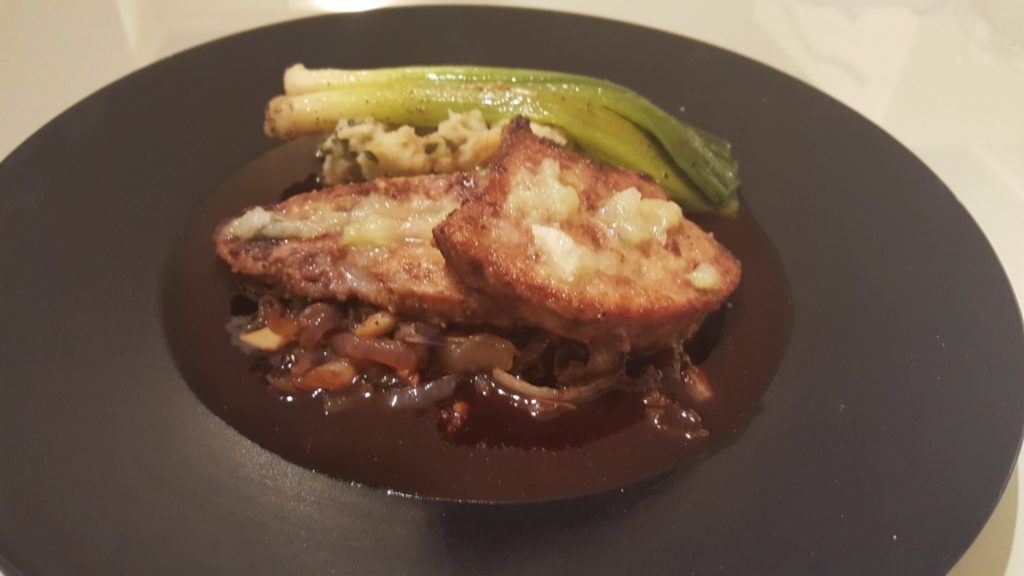
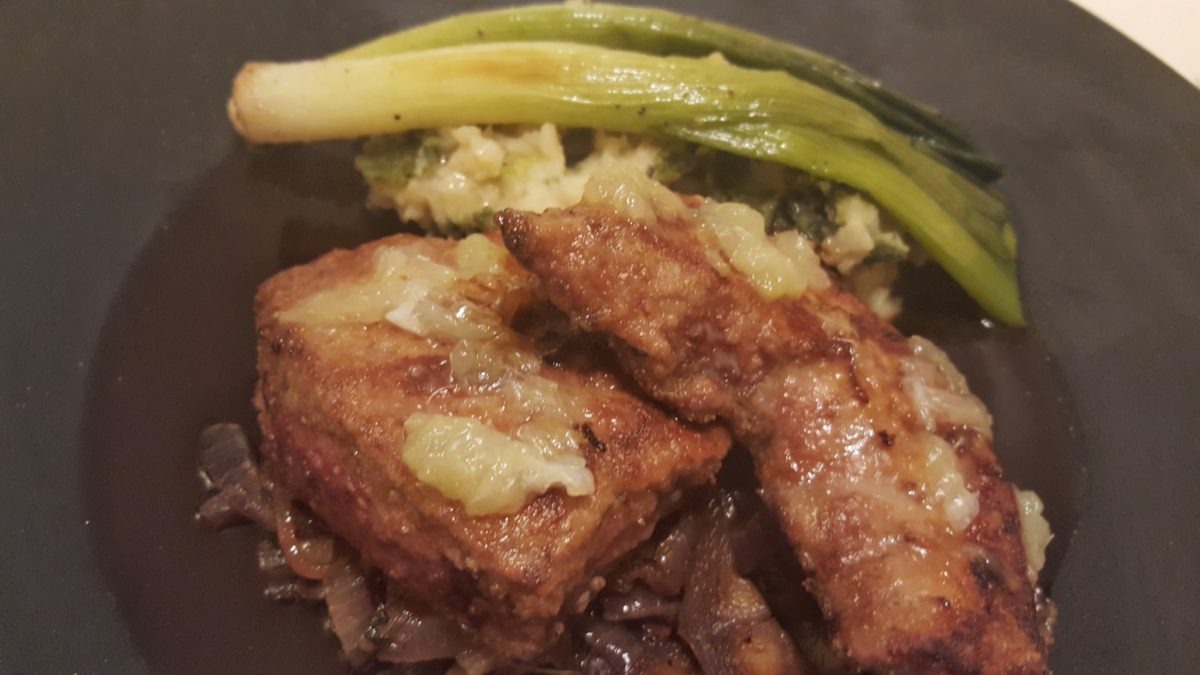
- Lift liver out of its hot pan. Put onions on one side of each plate, mash on the other, and 2–3 leeks over the mash. Set liver over onions, spoon sauce over and around, and finish with warm lime pieces. Pass any remaining sauce separately.
Equipment
Saucepans; Fine sieve; Large non-stick frying pan; Ovenproof frying pan; Steamer or blanching pan; Heated plates; Sauce boat
Notes
- Liver slices: aim for the source's preferred 1.5 cm thickness. These thicker portions are easier to fit into a home frying pan; adjust the brief oven finish to their thickness.
- Prepare first: have the sauce, onions, leeks and mash ready before cooking the liver. Lift the cooked slices from their hot pan immediately if the garnishes need a moment, so they do not keep cooking there.
- Lime: remove the white pith, catch the juice and keep the core for the sauce. Warm the cut segments only briefly at the end; they should hold their shape.
- Sauce: good chicken stock works, or use half chicken and half veal stock. Taste during the simmer and at the end, adjusting with lime juice and sugar as directed.
- Sugar: the listed 1–2 teaspoons is an approximate range. The Method allocates one teaspoon to the sauce and half a teaspoon to the onions, with any further adjustments made to taste.
- Onions and mash: keep the caramelised onions moist. Celeriac and Savoy cabbage crush is the writer's chosen accompaniment, though your preferred mash is also offered.
- Flour: dusting the liver is optional. Buckwheat flour is the source's suggestion if you need a gluten-free alternative.
- Other liver: the writer permits pig's, beef or lamb's liver, with cooking adjusted to the cut. For these stronger-flavoured alternatives, the source suggests soaking in milk for at least two hours or overnight; calf's liver does not need that preparation here.
- Leftover cabbage: fry bacon or pancetta, add the cabbage and crushed garlic, then moisten with a little water or stock. Finish with black pepper and nutmeg and serve with leftover liver and sauce.
- Time and clips: allow about an hour for the sauce after its reductions; the source gives no single elapsed total. Its linked Marco Pierre White clips show related onion and liver techniques, omitting the lime and oven finish. Use the written Method for this complete dish.
Photos
3 photos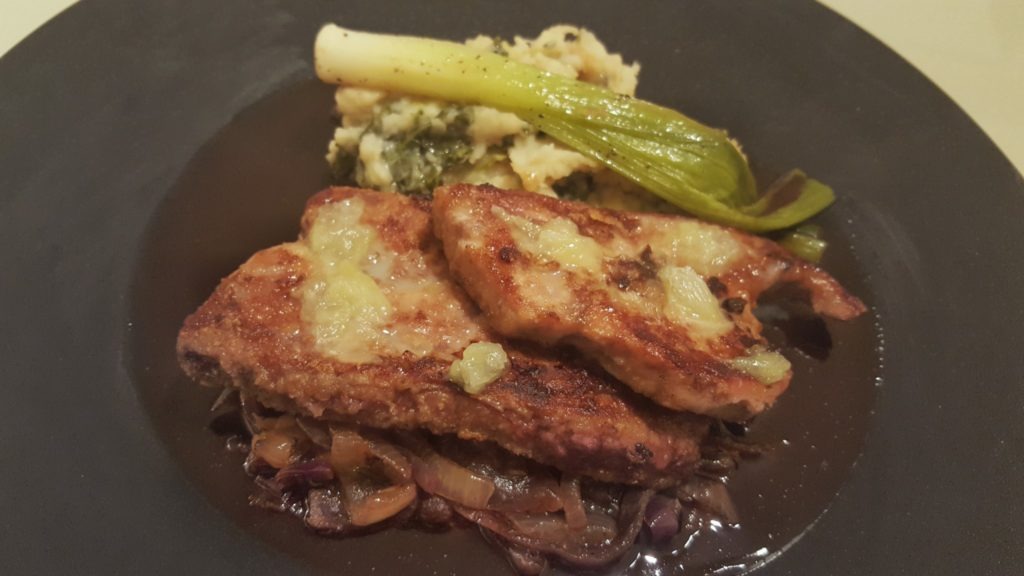
About this dish
British liver and onions is the starting point for The Dutch Foodie's plate, but the lime came from a memorable meal at a Raymond Blanc brasserie in Cheltenham. Its freshness against the richness of calf's liver was a surprise the writer wanted to revisit. A recipe in Marco Pierre White's White Heat offered the opportunity, although another fifteen years passed before the first attempt. It then became the writer's favourite way to cook calf's liver.
White Heat, first published in 1990, supplies the restaurant inspiration. The Dutch Foodie adapts it for a home frying pan with thicker slices, reduces the butter and serves fewer baby leeks. Celeriac and Savoy cabbage crush brings the meal back towards British liver, onions and mash, while leaving room for the citrus.
The sauce is built in stages: port, vermouth, then stock and herbs. Reduction gives it the concentration to sit alongside the liver; warm lime segments keep the finish fresh and sharp.
Recipe and cooking notes adapted from The Dutch Foodie.