
Ingredients
Batter for12 galettes
Complète filling, for each galette
Method
- Make a well in the buckwheat flour. Whisk in the egg and salt, then gradually whisk in water until smooth. Rest at least 2 hours at room temperature or overnight in the fridge.
- Bring the batter to room temperature, stir well and heat a crêpe pan. Add a little water if necessary so the batter is quite liquid.
- Melt a little butter in the hot pan and spread quickly with kitchen paper. Add about half a ladle of batter, tilting to cover the pan very thinly. Pour excess back immediately if necessary. Cook over medium-high heat for a couple of minutes, then turn and cook another minute.
- Brush the galette with a little melted butter. Stack under an upturned plate to keep warm and soft while cooking the remaining batter.
- For each complète, put a galette in the hot pan. Crack an egg into its centre and spread the white over most of the surface without breaking the yolk. Add a torn slice of ham and a little grated cheese around the yolk. Fold in four sides to form a square without touching the yolk. Finish with a little extra butter and serve.
Equipment
Crêpe pan; Whisk; Bowl; Plate
Notes
- Original batch: this is batter for 12 galettes. It is not a stated number of people, and the fillings are given for each galette.
- Allow time: the batter rests for at least two hours at room temperature or overnight in the fridge. The 30-minute headline excludes that rest; the cooking stages take about three minutes per galette before filling.
- Thin batter: bring it to room temperature and stir well. If it is thick, add a little water; flour brands differ. An ordinary non-stick crêpe pan is enough. Spread the batter quickly, pouring excess back immediately.
- Batter variation: omit its egg if you wish and add a little sparkling or soda water for lightness. This leaves the separate filling egg unchanged.
- Milder flavour: for the original batch, use 350 g buckwheat flour and 150 g plain wheat flour. This alternative contains gluten.
- Keeping unfilled galettes: stack under an upturned plate to stop them drying out. Refrigerate for up to two days, or stack in a well-sealed bag and freeze for up to two months. Baking paper between them is optional. Thaw overnight in the fridge or gently in the microwave.
- Complète: use one egg and one slice of ham per galette, with a little cheese and extra salted butter. The cheese and extra butter have no specified weights. Keep the yolk intact as you fold the sides inward.
- Serving and other fillings: add green salad and dry cider if desired. Spinach, cheese and egg make a Florentine; mushrooms, cheese and egg make a forestière.
Photos
9 photos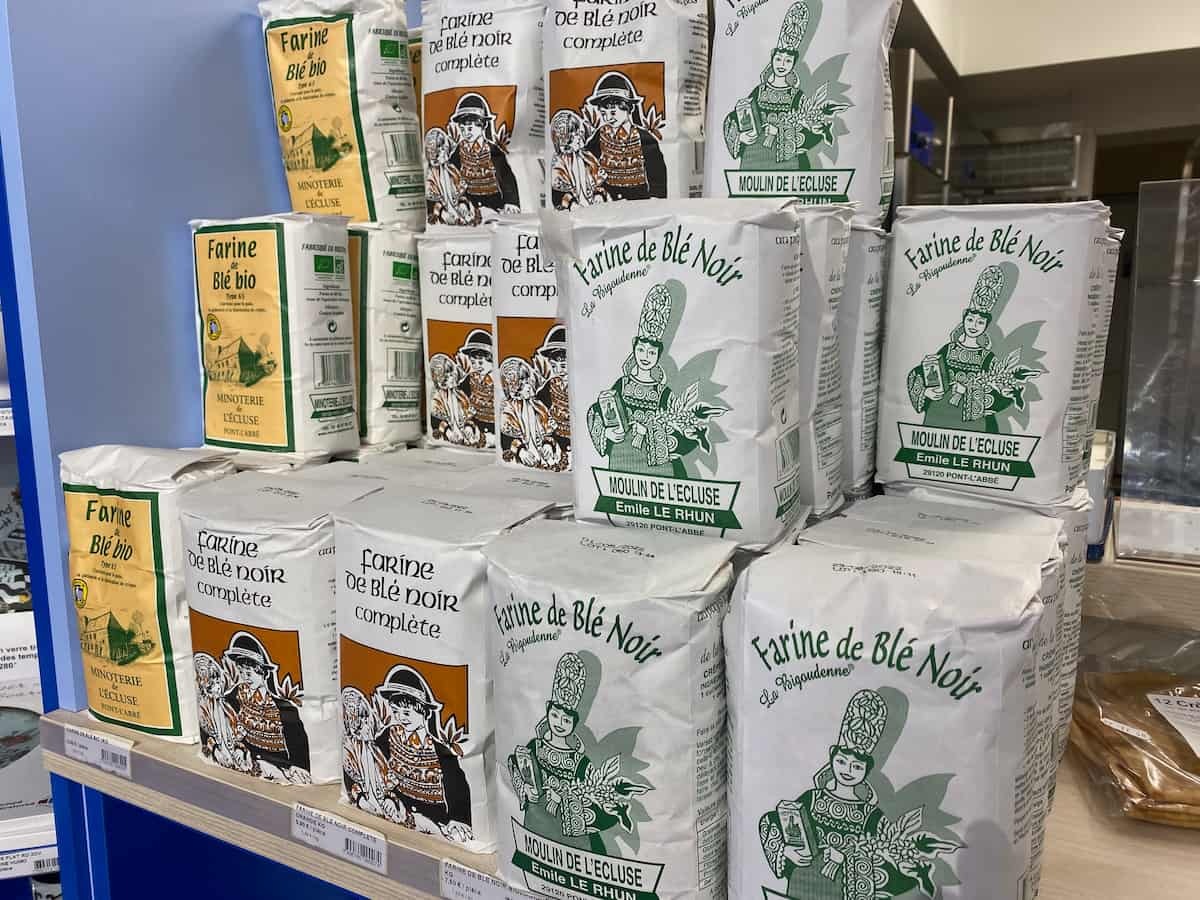 IngredientsBuckwheat flour, labelled sarrasin or blé noir
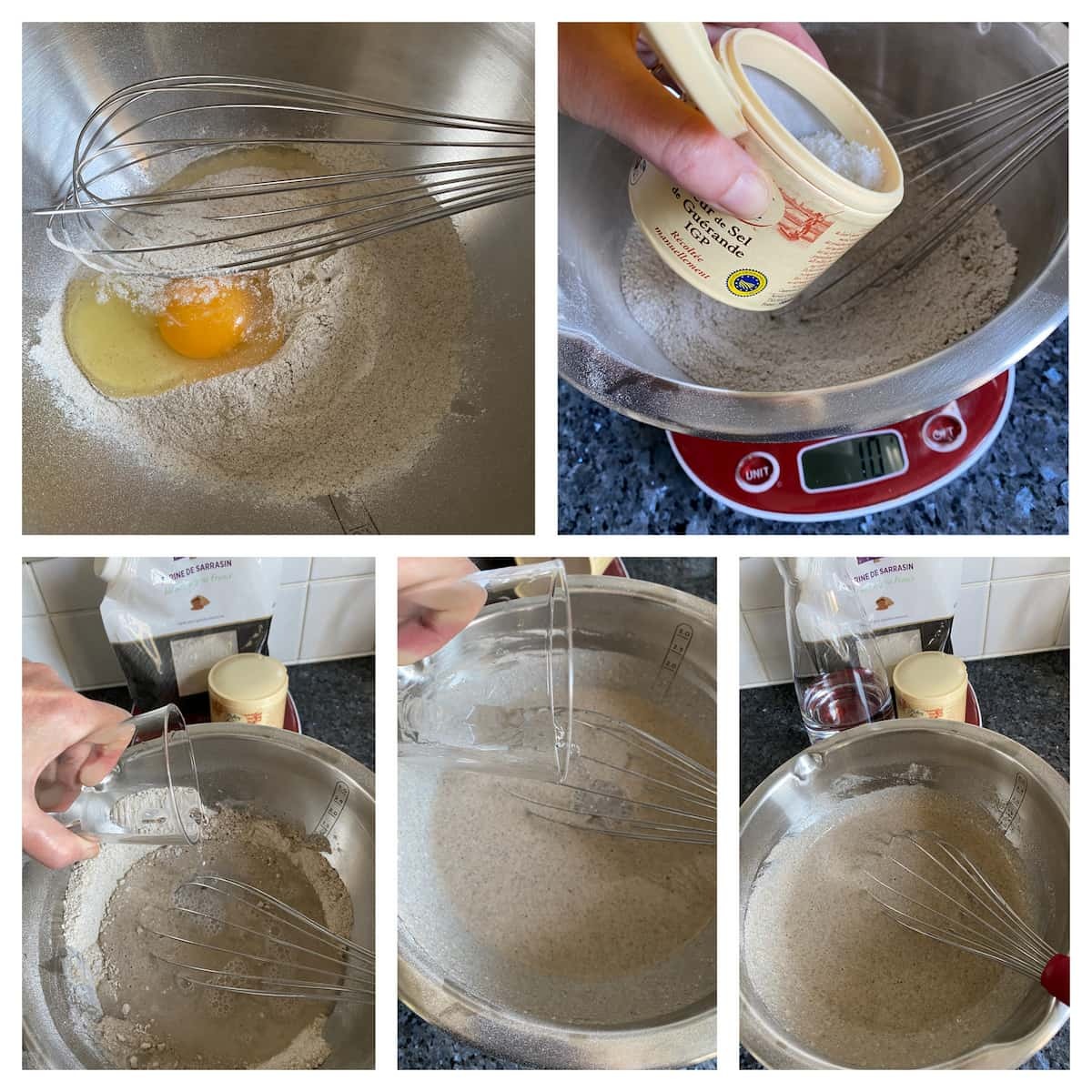 Step 1 · OverviewWhisk and rest the buckwheat batter
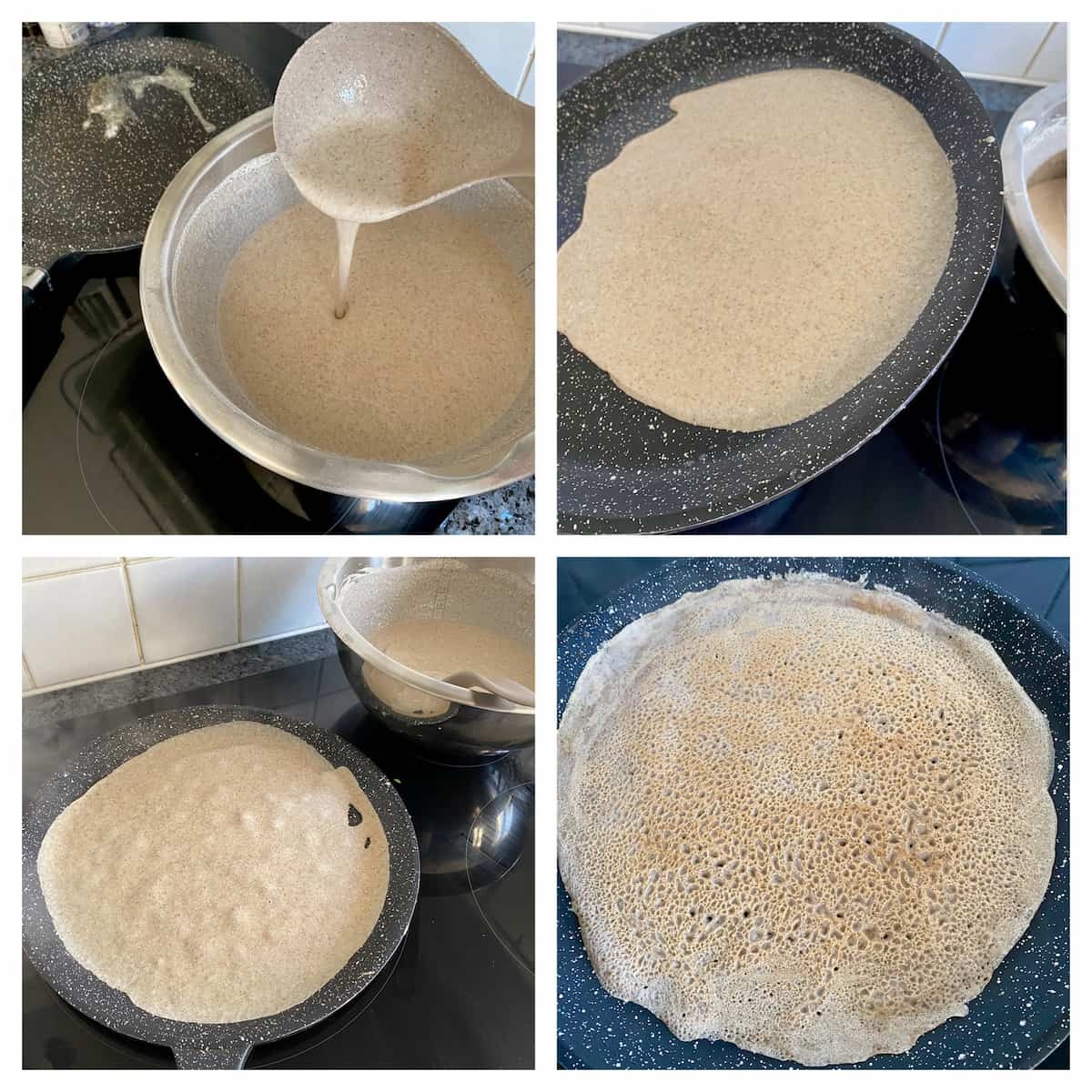 Step 3 · OverviewPour, tilt and cook the thin galette
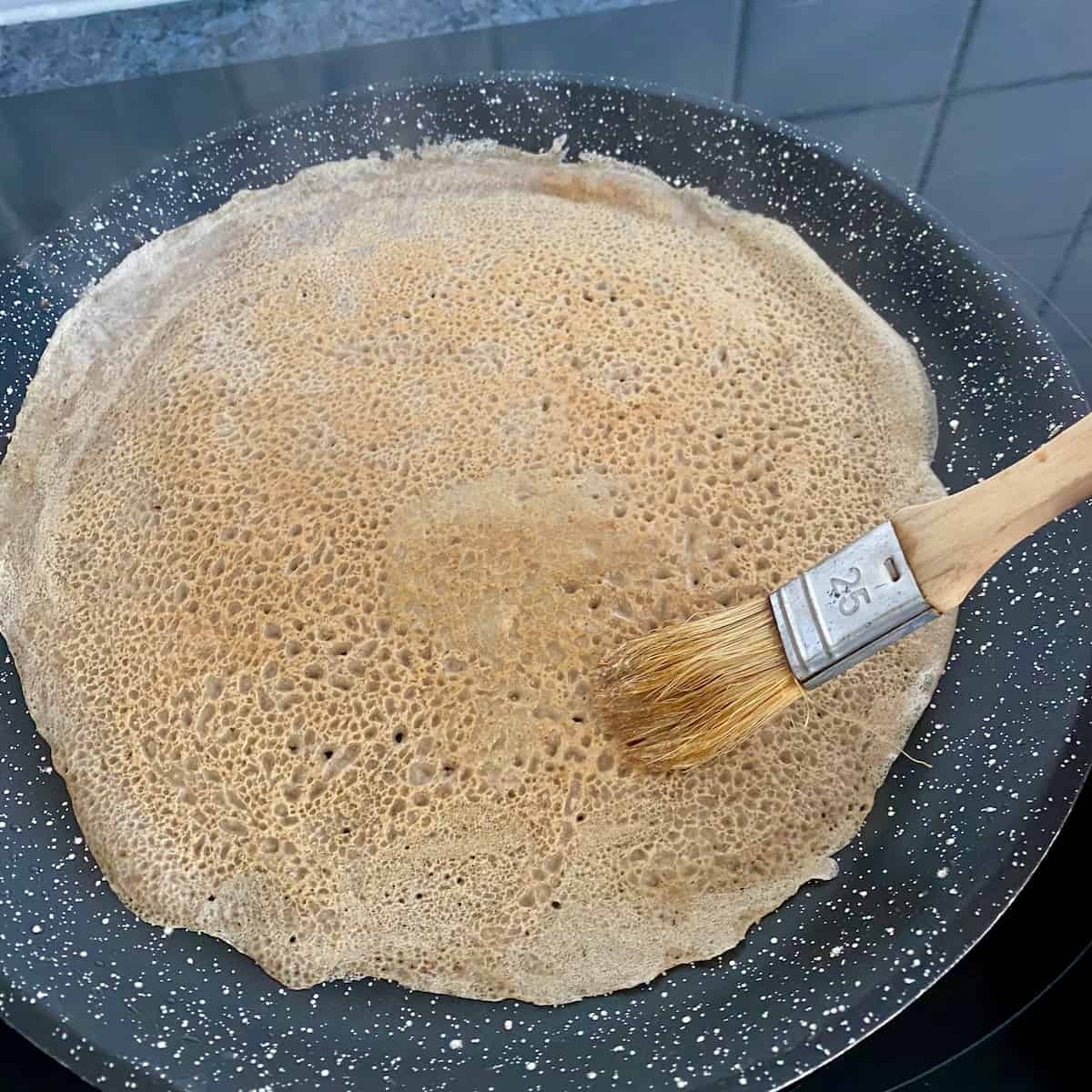 Step 4Brush the cooked galette with butter
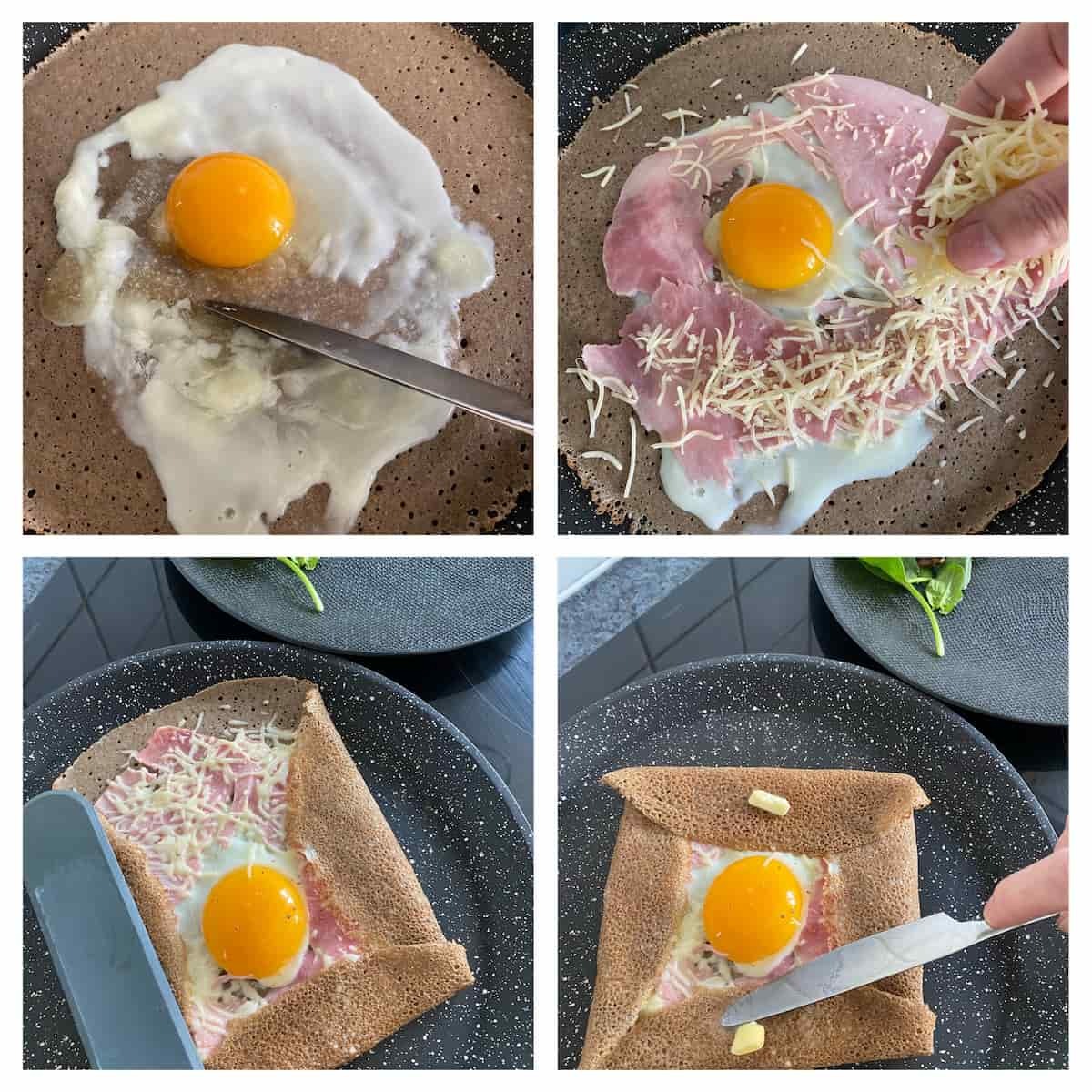 Step 5 · OverviewAdd egg, ham and cheese, then fold
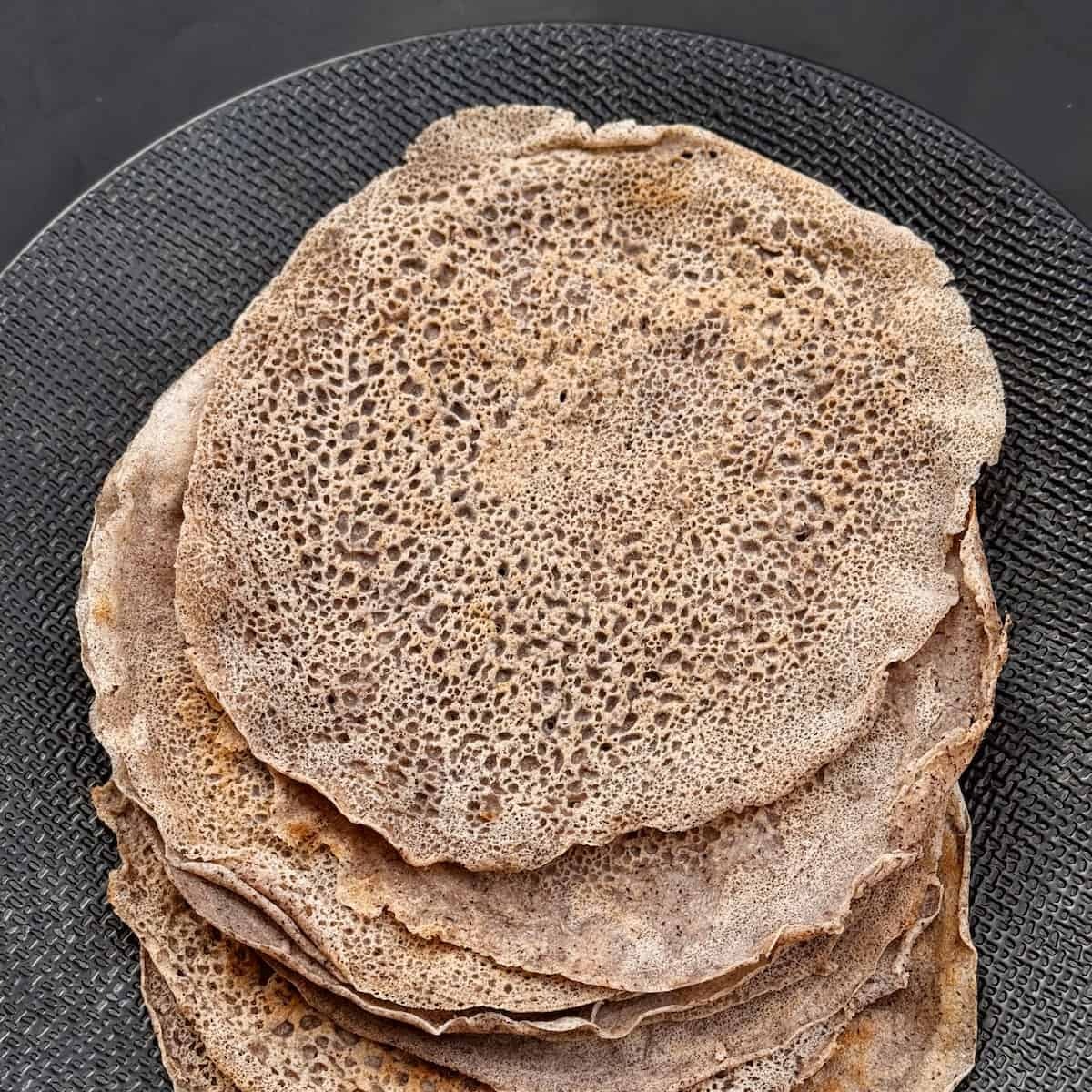 Finished dishA stack of plain cooked galettes
 ServingA complète with green salad
 ServingHam, cheese and egg in the folded galette
 ServingCut into the egg yolk
About this dish
Brittany’s buckwheat tradition began long before the fully garnished galette became a crêperie favourite. The crop is recorded at Rennes in 1497 and Saint-Brice-en-Coglès in 1502; older galettes were everyday fare, often eaten with soup or potée. The names depend on where you are: savoury buckwheat pancakes are called galettes in Haute-Bretagne, while crêpe de blé noir is used farther west.
Jill Colonna has made her batter for years, working from handwritten notes spattered with earlier batches. Her recipe uses buckwheat flour and water, with an egg she likes for extra lightness. A very thin layer of batter cooks quickly across the hot pan, forming the little holes that give the surface its lacy appearance. The complète adds ham, cheese and an egg, folded into a square with the yolk left visible. A final touch of salted butter completes it.
Recipe and cooking notes adapted from Mad About Macarons.