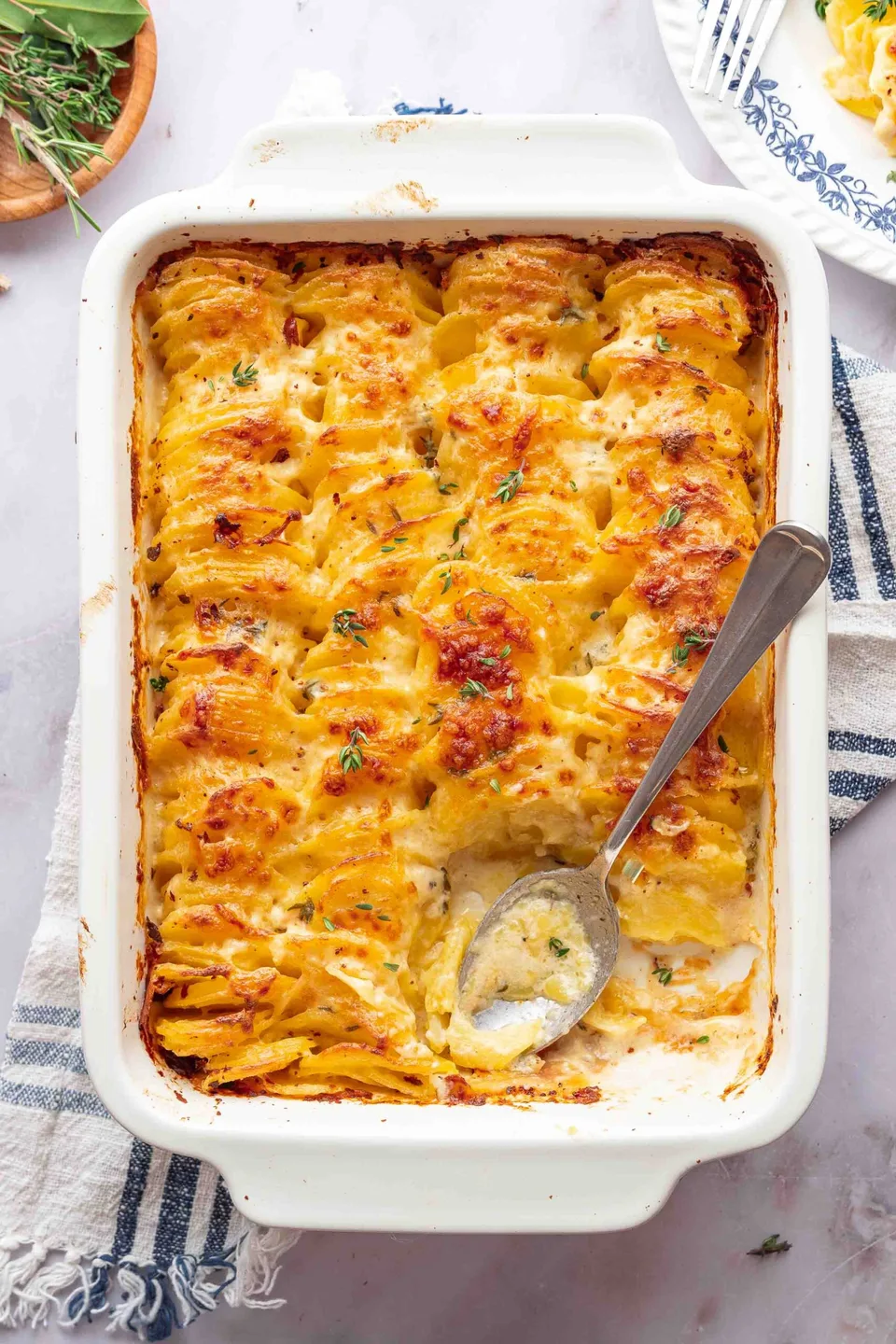
Ingredients
Gratin (complete published ingredient list)
Method
- Wash and peel potatoes; slice 3–4 mm thick. Keep in a bowl without rinsing the sliced potatoes.
- Peel garlic and remove its central green germ. Rub the dish with garlic; coat generously with butter. Combine cream and milk in a saucepan.
- Ladle a little dairy mixture into the dish. Layer potatoes, seasoning each layer with salt, pepper and nutmeg; add some dairy between layers. Pour the remainder over, nearly covering the potatoes.
- Bake on the middle shelf in a preheated oven at 150°C / 300°F for 90–120 minutes, depending on the dish. Check with a round-bladed knife: the potatoes should offer no resistance. Continue cooking if needed, then cool for one hour before serving.
Equipment
Medium gratin dish, dimensions unstated; Mandoline or food processor; Bowl; Saucepan; Small ladle
Notes
- Preserve the starch: wash the potatoes before slicing, then leave the 3–4 mm slices unwashed. Aim for even thickness throughout.
- Layering: use a medium-sized gratin dish and season each layer. The source gives no dimensions. Leave cheese out of this formulation.
- Check the centre: a round-bladed knife should pass through the potatoes as easily as through soft butter. Slice thickness and oven performance can extend the cooking time.
- Baking time: allow 90–120 minutes, then one hour of cooling. The dish and oven performance can affect the bake, so use the knife test rather than the clock alone.
- To serve: roast meat suits the rich potatoes. For a simpler meal, add a green salad with Grenoble walnuts.
How to
Photos
1 photo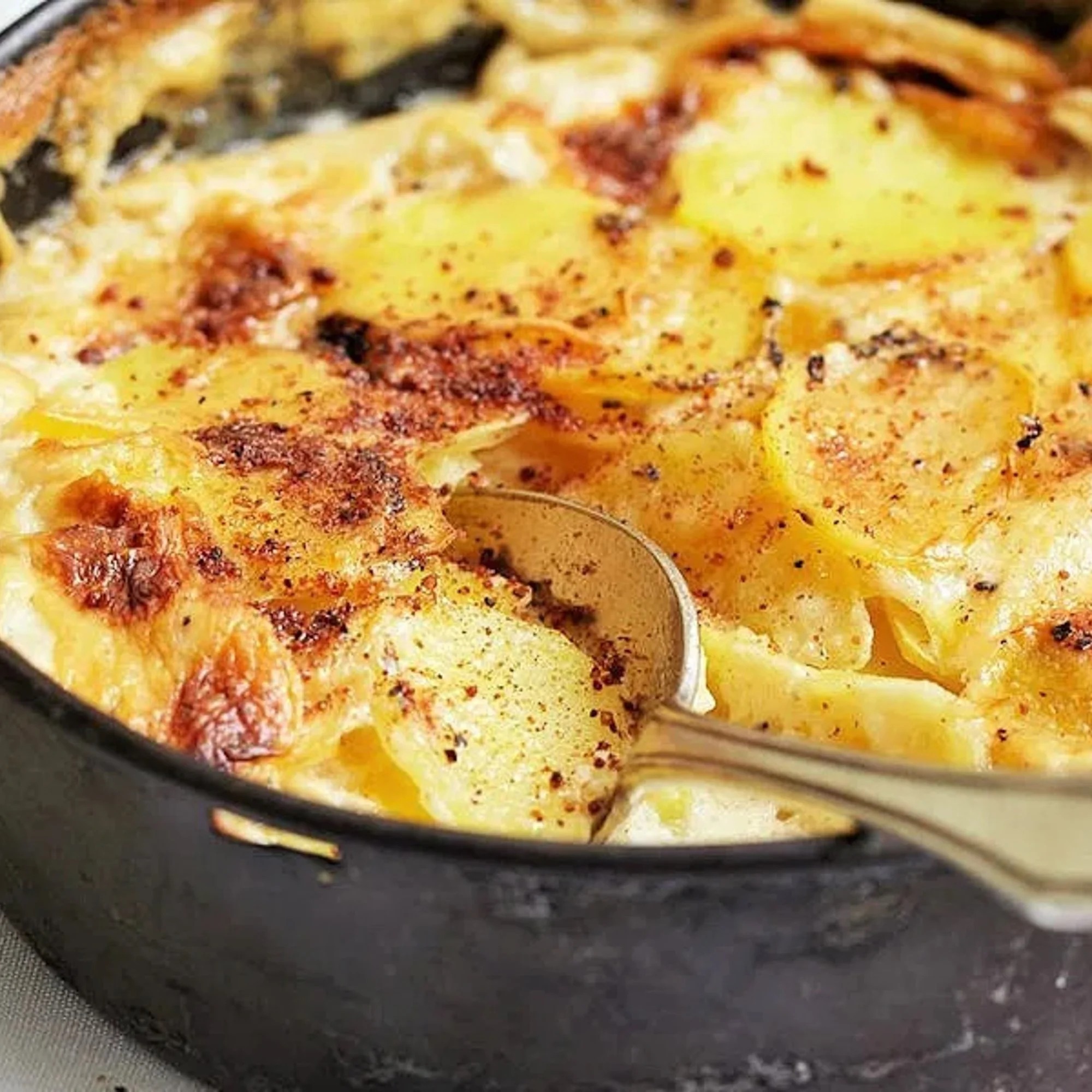
About this dish
The Dauphiné gives this gratin its name, and Grenoble still counts it among the region's defining dishes. The city's tourism office traces an early mention to a dinner for Gap's municipal officers in 1788. Its familiar combination of potato, milk, cream and garlic has travelled far beyond that regional setting, but the appeal remains the same: simple ingredients made rich through patient cooking.
French Cooking Academy is emphatic that its dauphinois contains no cheese. The raw potato slices do some of the sauce-making themselves. Their surface starch thickens the milk and cream as the gratin bakes, binding the layers; rinsing after slicing would wash some of that starch away. Even thickness helps each layer soften at the same pace.
Rubbing the dish with garlic gives fragrance before butter coats the base and sides. Salt, pepper and nutmeg are distributed between the layers rather than left on top. The finished potatoes should yield to an ordinary knife without resistance, then rest before serving.
Recipe and cooking notes adapted from French Cooking Academy.