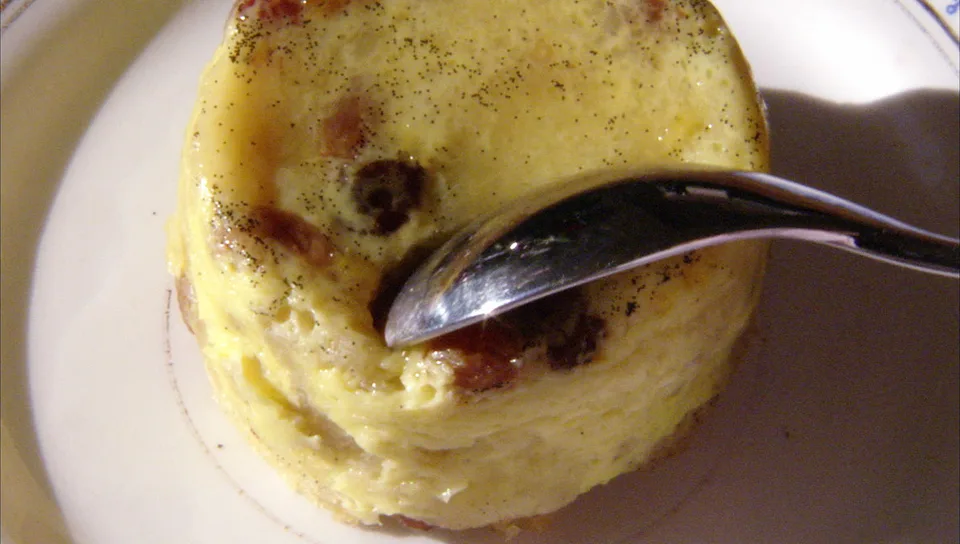
Ingredients
Puddings
Method
- Heat oven to 180°C/356°F, or fan 160°C/320°F. Spread brioche and bread on a tray, dust with icing sugar and toast 8–10 minutes. Reduce to 140°C/284°F, or fan 120°C/248°F.
- Cover both dried fruits with cold water; bring to a boil and drain. Mix with rum; cool.
- Whisk caster sugar and yolks until pale. Whisk in milk, cream and vanilla seeds; strain into a jug.
- Butter ramekins and six foil covers. Stand ramekins in the roasting tin; divide toasted bread, fruit and rum between them, then add custard.
- Cover with greased foil. Add hot water 2–3 cm up the ramekins; bake 30 minutes. Lift out carefully and glaze with warm jam.
Equipment
Six ramekins, about 10 cm × 8 cm (source dimensions; capacity unspecified); Deep roasting tin; Baking sheet; Saucepan; Mixing bowl and balloon whisk; Fine sieve and jug; Foil and pastry brush
Notes
- Bread and brioche: toast them before filling the ramekins. Croissants are also offered in the retained recipe, but their size and the thickness of the bread slices are not specified, so equal counts will not necessarily give equal volumes.
- Preparing the fruit: cover both dried fruits with cold water and bring to the boil, then drain and mix with the rum. Let the mixture cool before assembly; the recipe does not time that cooling stage.
- Filling the dishes: strain the custard into a jug before pouring. Butter the ramekins and the foil covers as directed, and cover each pudding before baking.
- Water bath and dish size: use hot water to a depth of 2–3 cm up the ramekin sides. The original six ramekins are described as about 10 cm × 8 cm, with no capacity given. A different dish size may change how the batch fits.
- Glazing and serving: lift the ramekins carefully out of the roasting tin and brush the puddings with warmed apricot jam. Roux’s preference is to eat diplomat pudding just warm.
About this dish
Diplomat pudding was the first recipe Michel Roux Jr learned as a pastry apprentice in 1976. He recalls it with affection and likes it best just warm. It also reflects a useful home-cooking tradition: making a rich dessert from bread that is past its freshest, as in bread and butter pudding.
The French name diplomate has belonged to several desserts. Escoffier’s Le Guide Culinaire of 1903 gives a cold version with vanilla Bavarian cream, liqueur-soaked sponge fingers, raisins and apricot jam. Fruit, cream and liqueur connect these preparations, while Roux’s baked puddings have a character of their own.
This version comes from Michel Roux At Home, published by Seven Dials. Its custard uses six yolks with milk and single cream, and the bread is toasted before assembly. A sieve removes any lumps from the custard; foil covers and a water bath protect the gentle bake. The final apricot glaze gives each little pudding its glossy top.
Recipe and cooking notes adapted from delicious. magazine.