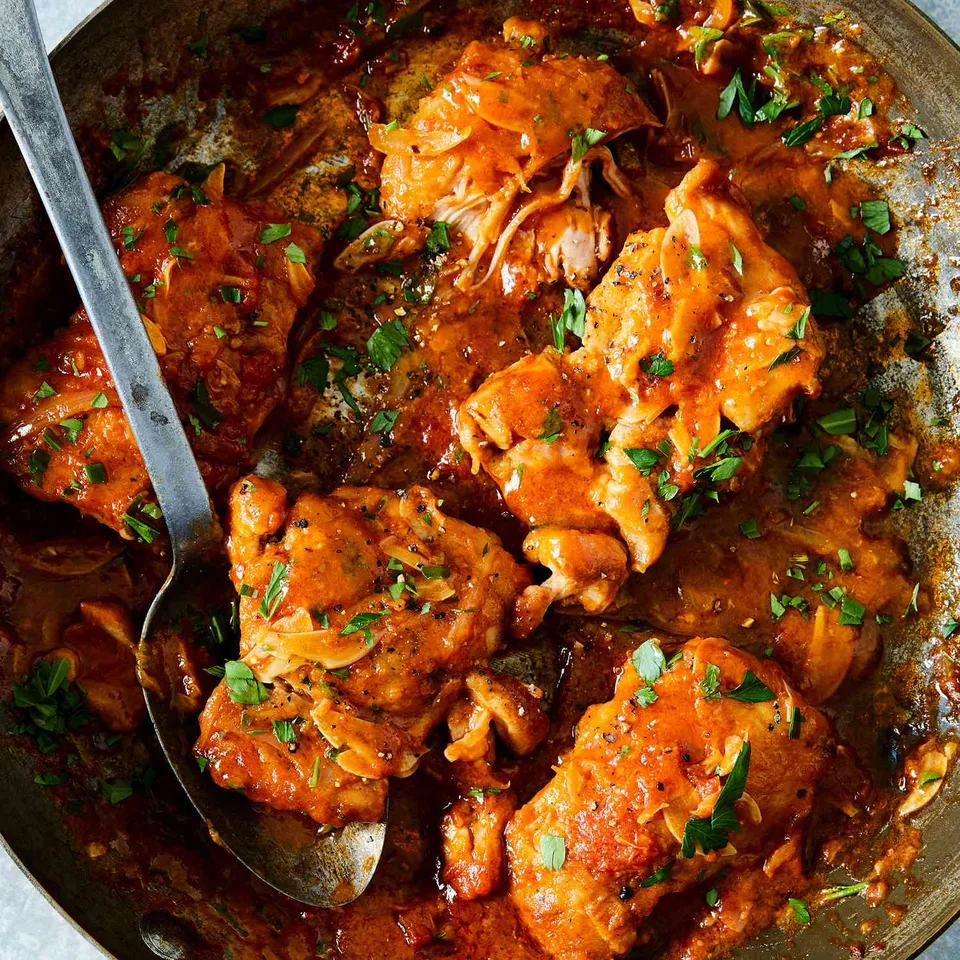
Ingredients
Chicken and vinegar sauce
Alternative
2 US tbsp unsalted butter + 1 US tbsp peanut oil, at the four-serving base
Method
- Heat the oven to 200°F / about 93°C. Warm the clarified butter with the unpeeled garlic over medium-high heat in a skillet large enough for the chicken in one layer. Cook until the butter’s sizzling subsides, about three minutes.
- Add the chicken and brown lightly for 5–7 minutes, turning after three minutes. Season generously with salt and black pepper.
- Pour in the vinegar and bring to a brisk boil. Add the tomatoes and parsley, reduce the heat to low and cover. Cook for about 15 minutes, turning the chicken after seven minutes, until cooked through.
- Transfer the chicken to a baking dish and keep warm in the oven while finishing the sauce.
- Spoon off and discard the fat from the sauce. Let it reduce gently over low heat by one-third, about 3–4 minutes. Remove and peel the garlic cloves, then mash the garlic into the sauce. Adjust the salt and whisk in the finishing butter until creamy.
- Arrange the chicken on a platter, pour over the sauce and serve immediately.
Equipment
Large heavy-bottomed skillet with lid; Baking dish; Oven; Wooden spoon; Whisk; Serving platter
Notes
- Choose a mild white wine vinegar or rice vinegar and very ripe tomatoes. Their balance is central to this version of the sauce.
- Clarified butter is the first choice for browning. Alternatively, use 2 US tablespoons unsalted butter with 1 US tablespoon peanut oil for the original four-serving batch.
- Use a heavy skillet large enough for the chicken pieces to lie in one layer. The low oven holds the cooked chicken warm while the sauce is finished.
- Skim fat and impurities from the sauce before reducing it by one-third. The Food & Wine Test Kitchen highlights this for a cleaner-looking finish.
- Peel and mash the cooked garlic into the sauce, then whisk in the finishing butter until creamy. Pour over the chicken and serve immediately.
How to
Photos
1 photo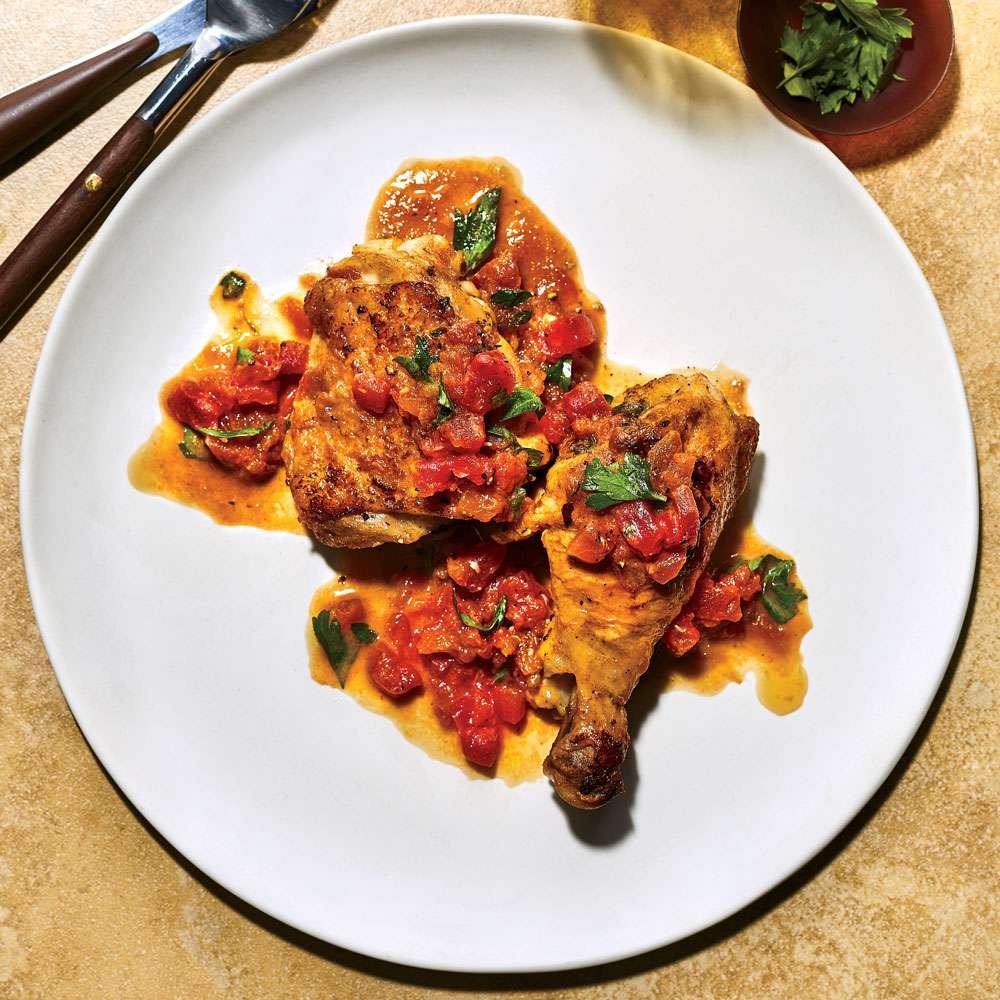
About this dish
Poulet au vinaigre is one of the dishes associated with Lyon’s bouchons, the small restaurants serving the city’s traditional cooking. The region’s taste for vinegar sauces meets the poultry of neighbouring Bresse in a dish whose character comes from a lively pan sauce. Tomato is common in some versions and absent from others; red wine vinegar is a frequent choice.
Paul Bocuse takes a gentler route with mild white wine vinegar or rice vinegar and fresh, very ripe tomatoes. Food & Wine connects his bold flavours and lighter finish with the nouvelle cuisine movement he helped lead. Here the tomatoes, garlic and chicken juices supply much of the sauce’s substance.
The chicken rests in a warm oven while the sauce is skimmed and reduced. Garlic, cooked in its skin, is peeled and mashed back in. Butter is whisked through at the end, giving the concentrated juices a smooth texture and rounding their acidity.
Recipe and cooking notes adapted from Food & Wine.