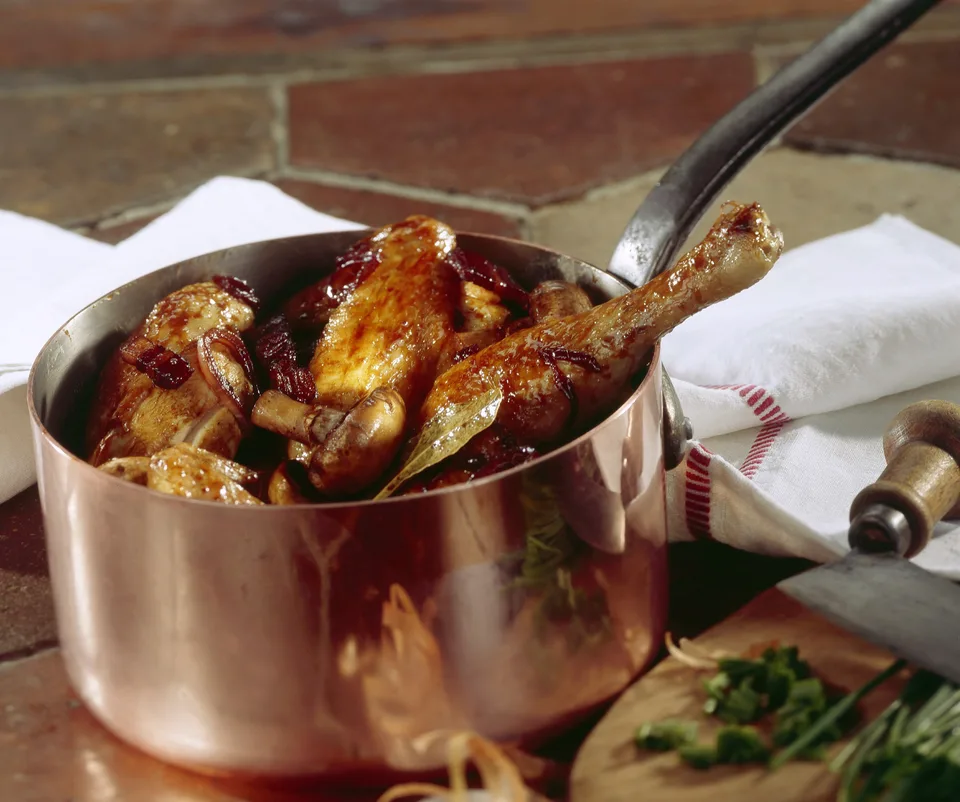
Ingredients
Chicken and shallot vinaigrette
Method
- Heat the oven to 180°C / 350°F / gas 4. Cut through the chicken backbone lengthways, flatten the bird and place it bone-side up in a roasting pan. Season with salt and pepper.
- Roast for 25 minutes. Turn skin-side up and roast for 15 minutes, or until the skin is brown and glossy.
- Meanwhile, chop the shallots as finely as possible and mix with the oil, vinegar, mustard and seasoning.
- Pour the vinaigrette over the bronzed chicken, turn the oven off and leave it for ten minutes or longer so the chicken juices mingle with the dressing.
Equipment
Roasting pan; Oven
Notes
- Shallot texture: chop the shallots as finely as possible. They should soften in the chicken's heat while retaining some crunch.
- Dressing oil: use the specified vegetable oil. Koffmann's goose-fat rub is discussed as an option in Fort's article, but Fort does not include it in his ingredient list.
- Final rest: once the vinaigrette is poured over, leave the chicken in the switched-off oven for ten minutes or longer. Allow for this stage in addition to the forty minutes of roasting; preparation time is unstated.
- At the table: serve crunchy salad and springy bread with the chicken. Spoon a little of the roasting-pan dressing over the salad too.
About this dish
Pierre Koffmann's Memories of Gascony draws on the seasonal cooking of his grandparents' farm. The book includes chicken grilled with shallots and vinaigrette in its spring chapter. Flattening poultry for the grill has an older French history: the Académie française's 1740 definition of à la crapaudine describes opened, flattened pigeons, their shape recalling a toad.
Matthew Fort borrowed Koffmann's idea but used the oven for an English winter lunch. It suited his hurried family meal well enough for a guest to request the recipe. The selected version follows that oven adaptation, with the flattened bird turned during roasting so its skin can colour.
The dressing joins the chicken after roasting. Its heat takes the raw edge off the finely cut shallots while preserving some crunch; mustard and vinegar mingle with the savoury juices during the final rest. The sauce belongs over the carved meat, with bread to gather what remains in the pan.
Recipe and cooking notes adapted from The Guardian.