Ingredients
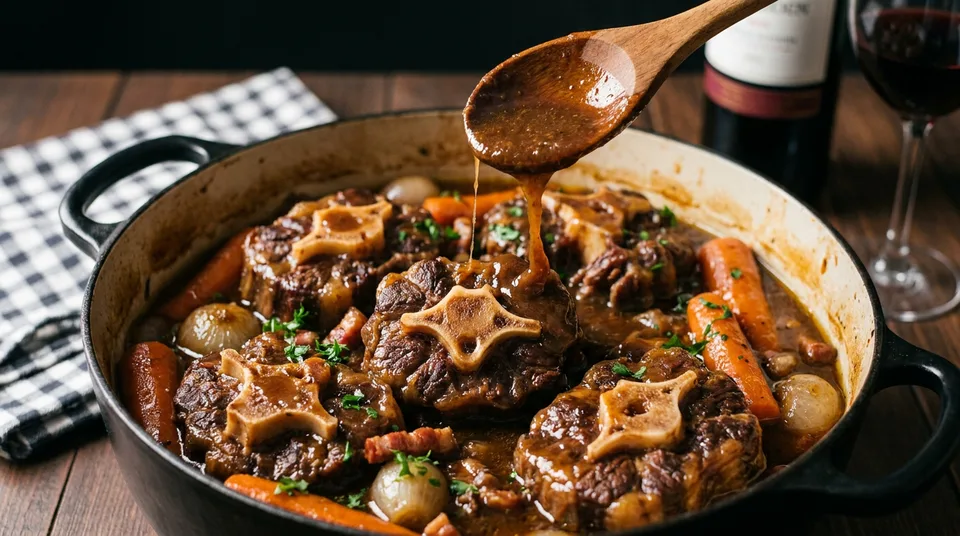
Queue de bœuf braisée
Glazed pearl onions
Method
- Lightly flour the oxtail and brown it in hot oil, working in batches.
- Soften the lardons, sliced onions and garlic in the same casserole; cook in the tomato paste for 2 minutes.
- Add the wine, scrape the base and reduce by half. Add stock and bouquet garni.
- Cover and braise at 150°C (302°F) for 4 hours, adding the carrots after 2 hours.
- Cool, refrigerate overnight and remove the set surface fat.
- While gently reheating the oxtail, prepare the onions. Put the peeled pearl onions in one layer in a small sauté pan with the butter, sugar, a pinch of salt and water halfway up their sides. Cover with a baking-paper lid with a small central vent and simmer gently. After about 10 minutes, remove the paper and continue until the onions are tender and the water has evaporated, adding a little water if they need longer. Let the buttery syrup turn golden brown, rolling the onions gently to coat them without burning the glaze.
- Lift the tender oxtail out of its sauce and reduce the liquid until it coats a spoon. Return the meat gently, season and add the glazed pearl onions.
Equipment
Lidded ovenproof casserole; Tongs; Fine sieve; Refrigerator and a suitable cooling container; Small sauté pan; Baking paper for a vented lid
Notes
- Meaty pieces: ask for thick cuts from the upper end of the tail, about 5 cm. Brown them in batches to build colour without steaming.
- Tomato and wine: cook the tomato paste for its two minutes before adding liquid. Scrape the base when adding wine, then reduce by half as directed.
- Braising: keep the liquid barely simmering. Add the carrots after two hours. For meat that is still firm, the publisher suggests extending cooking by an hour.
- Overnight rest: refrigerate the cooled braise and remove the solid surface fat before reheating. The juices should set with gelatin; the source advises further cooking and reduction if they remain thin.
- Final sauce: remove the tender meat while reducing the liquid so the pieces do not fall apart. Return them gently and serve with mash or fresh pasta.
- Keeping and reheating: the publisher gives four days in the fridge or six months frozen in portions with the juices. Reheat gently in a saucepan, or covered for 45 minutes at 150°C.
- Another meal: shred leftover meat for a potato-topped parmentier, or combine it with a little jellied juice for ravioli filling. Spare juice can enrich sauces, risotto and purée.
- Wine choices: Castillon Côtes de Bordeaux or Bergerac are the publisher’s suggestions for ripe fruit and supple tannins, with Bordeaux offered for a lighter finish. Choose a wine you like drinking and serve the accompanying bottle around 15–16°C. Replacing part of the cooking wine with beer or port is also offered, without a specified ratio.
- Pearl onions: choose a pan that holds them in one layer. The water should reach halfway up their sides. Let them become tender before allowing the glaze to colour, and roll them gently so they stay whole. Prepare them while reheating the braise.
- Planning: the headline combines 30 minutes of preparation and four hours of cooking. Allow the overnight chilling and subsequent reheating as well; it is not a full elapsed total.
Photos
1 photo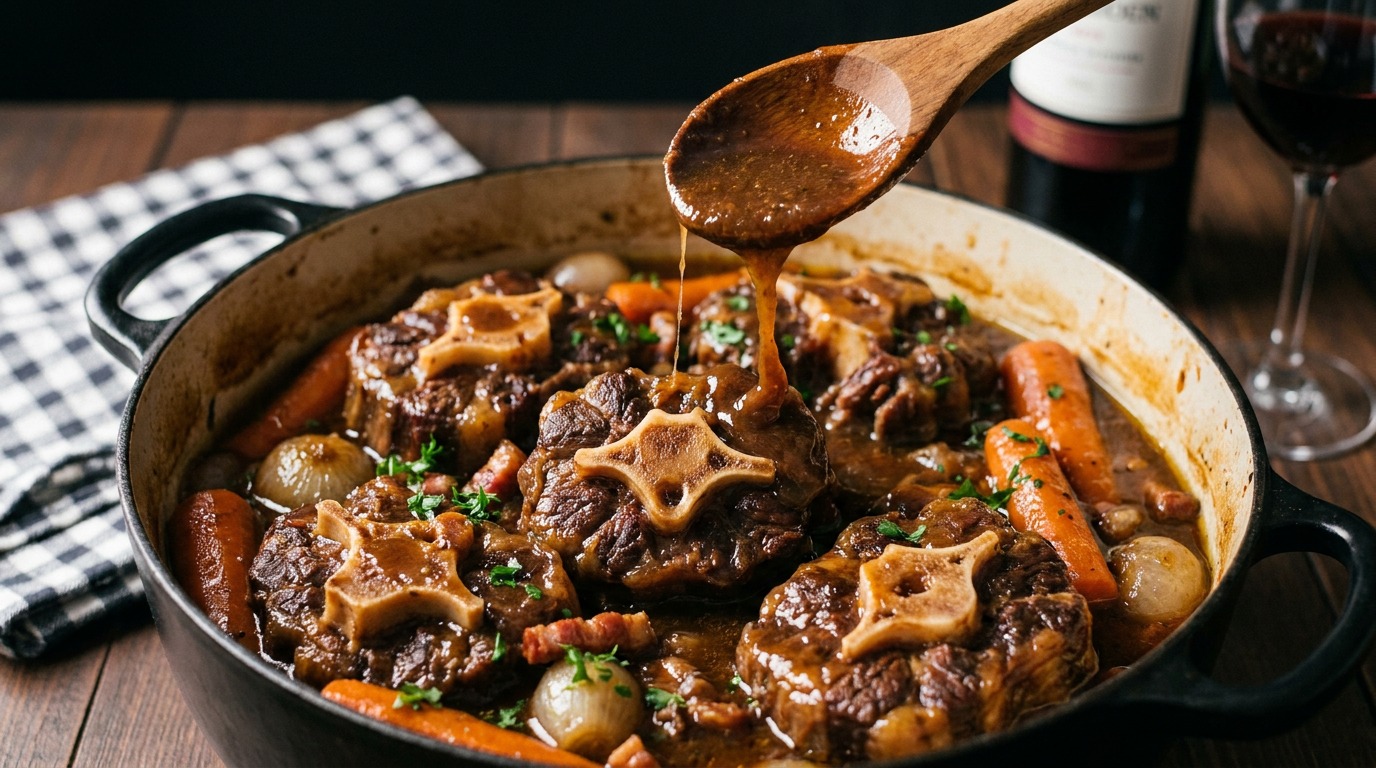
About this dish
Classical French cooks valued oxtail for patient braising. Escoffier included several versions in A Guide to Modern Cookery, among them white-wine preparations with onions, chestnuts or mushrooms. The cut’s connective tissue rewards that long cooking by turning to gelatin, giving body to the cooking liquor as the meat becomes tender.
Cave Larégnère uses red wine with smoked lardons, tomato and a bouquet garni. Browning gives the sauce its first depth of colour; cooking the tomato paste before adding liquid deepens its flavour. The covered oven keeps the braise gentle, and the carrots enter halfway through so they remain recognisable pieces. Overnight chilling allows the plentiful fat to set for easy removal. At the finish, the fragile meat is lifted out while the sauce reduces, then returned carefully.
The wine merchant’s advice follows the same generous approach: choose a supple red with ripe fruit, use it in the casserole and enjoy it with the meal. Spare gelatin-rich juices are worth keeping for another sauce, risotto or purée.
Recipe and cooking notes adapted from Cave Larégnère.