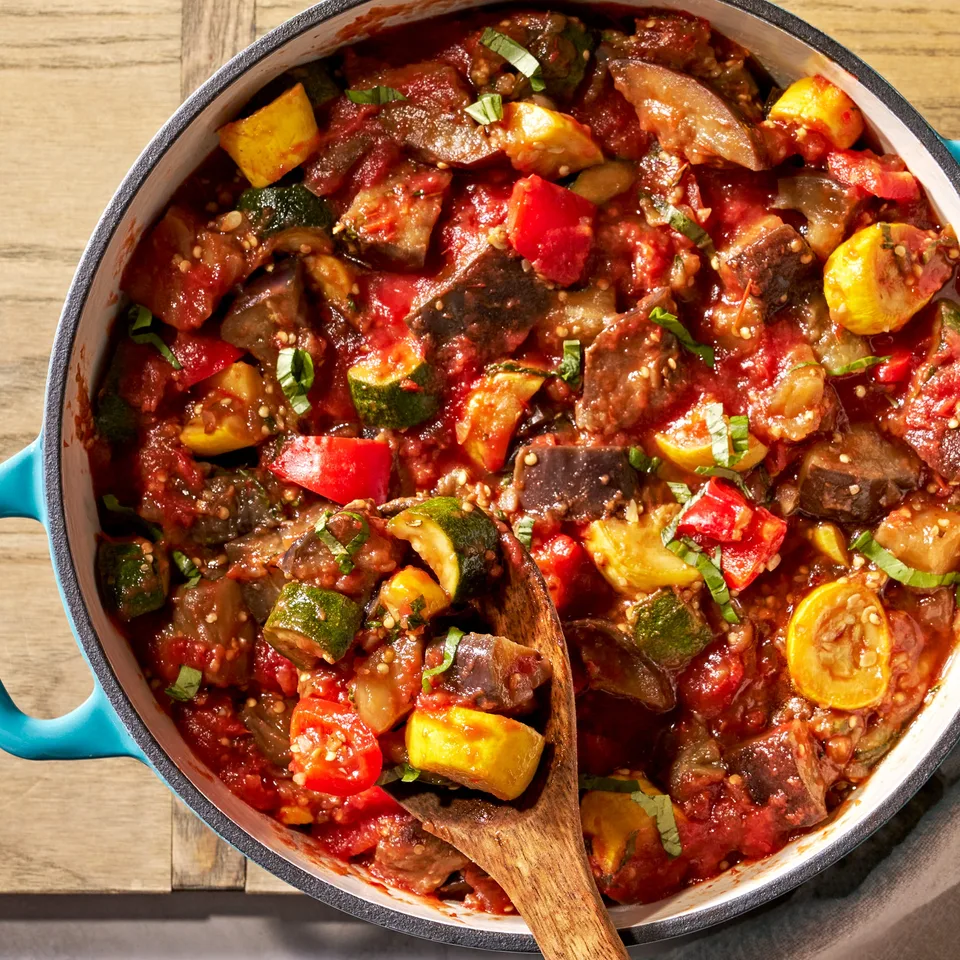
Ingredients
Ratatouille
Method
- Warm the olive oil in a frying pan. Sweat the sliced onions until soft, add the sliced garlic and cook until softened. Transfer both to a deep roasting tin or baking dish.
- Fry the thickly sliced aubergines, courgettes and quartered peppers separately, adding more olive oil as needed, until each batch is pale gold. Add each vegetable to the roasting dish as it is ready.
- Add the thickly sliced plum tomatoes to the dish. Season with salt, black pepper and thyme.
- Bake at 180°C /356°F /gas 4 for about 40 minutes until the vegetables are soft and tender. Gently stir in the torn basil leaves and serve.
Equipment
Frying pan; Deep roasting tin or baking dish; Oven
Notes
- Frying: cook the aubergines, courgettes and peppers separately until pale gold, adding olive oil as needed. The extra attention lets each vegetable keep its character before they finish together in the oven.
- Serving: Slater prefers ratatouille warm rather than piping hot and also enjoys it cold as a salad. Stir the torn basil in gently at the end.
- Another meal: turn leftovers into a sauce for large tubular pasta. For a savoury pie, cover with a crumble made from flour, butter, thyme leaves and grated cheese; Slater gives the idea without topping quantities or an additional baking schedule.
- Batch and planning: the listed ingredients make one original batch, with no stated person count. Allow about 40 minutes for the oven stage plus preparation and the separate frying, which have no published total.
About this dish
Ratatouille brings the summer vegetables of southern France together in one dish: tomatoes, peppers, aubergines and courgettes, with olive oil and herbs. It is an established part of Niçoise cooking, and Nice’s municipal recipe gives the vegetables separate turns in the pan before their final cooking together. That individual attention is central to Nigel Slater’s approach too.
He wants the vegetables tender enough to be almost collapsing, but still able to contribute their own flavours. Separate frying gives each its pale-gold colour before the tomatoes and thyme join them for the oven finish. Basil goes in last, keeping its fragrance fresh. It is a generous dish with several lives: warm at the table, cold as a salad, or carried into a savoury crumble or pasta sauce. Slater has less patience with tiny, carefully moulded restaurant portions, joking that those might be called ‘rata-twee’.
Recipe and cooking notes adapted from The Observer / The Guardian.