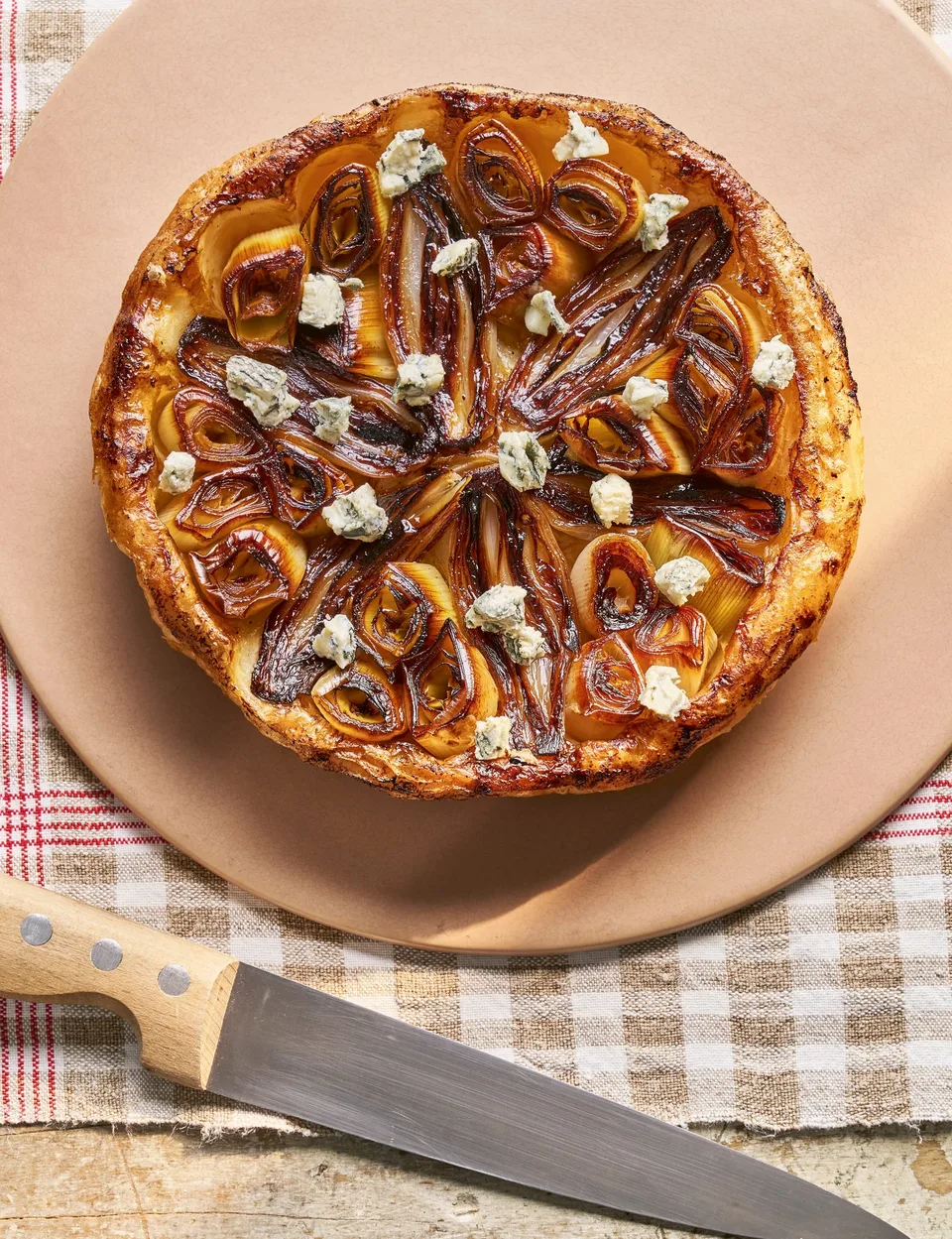
Ingredients
Tart
Method
- Heat the oven to 180°C /356°F, or 160°C fan. Peel and trim the shallots, then halve them lengthways. Remove the leeks’ outer layer, trim both ends and cut into 3 cm pieces. Rinse well.
- Crumble the blue cheese and refrigerate. Unroll the pastry and use an upturned 24 cm frying pan as a rough guide to cut a circle. Keep it on a lined tray in the fridge.
- Pour the olive oil into the ovenproof pan. Arrange shallot halves in a star pattern and fit the leeks snugly between them. Season with salt and pepper. Caramelise slowly over medium heat for about 10 minutes. When golden, remove from the heat, add the butter and let it melt.
- Lay the pastry over the vegetables and tuck its edges down with the handle of a dessert spoon. Make a small opening in the centre for steam. Bake 30–35 minutes until golden, then cool slightly.
- Run a small knife around the pastry edge. Place a large plate upside down over the pan and turn both over in one movement, taking care with hot juices. Scatter over the crumbled blue cheese and serve warm, with a garden-leaf salad if desired.
Equipment
24 cm ovenproof frying or sauté pan; Lined baking tray; Dessert spoon; Large serving plate; Small knife
Notes
- Fit the pan: use an ovenproof frying or sauté pan about 24 cm across. Fit the shallots and leeks snugly together because they shrink during cooking. Let them colour slowly before covering them.
- Keep pastry cold: use the upturned pan as a rough cutting guide, then return the circle to the fridge while preparing the vegetables. Chill the crumbled cheese too. An exact pastry fit is unnecessary; tuck the edges around the vegetables.
- Let steam escape: cut a small central opening in the pastry. After baking, let the tart cool slightly before loosening the edge with a small knife.
- Turn out carefully: cover the pan with a large plate and invert both together in one movement. Watch for escaping hot juices. Add the cheese only after turning out; Saint Agur is Blanc's preference, with any blue cheese an alternative.
- Serve warm: garden leaves make a fresh accompaniment. A blue-cheese dressing is optional.
- Amounts and elapsed time: the source’s half-pack of cheese and one pack of pastry have no stated pack weights. The headline 60 minutes covers preparation and cooking, with the unquantified slight cooling additional.
Photos
1 photo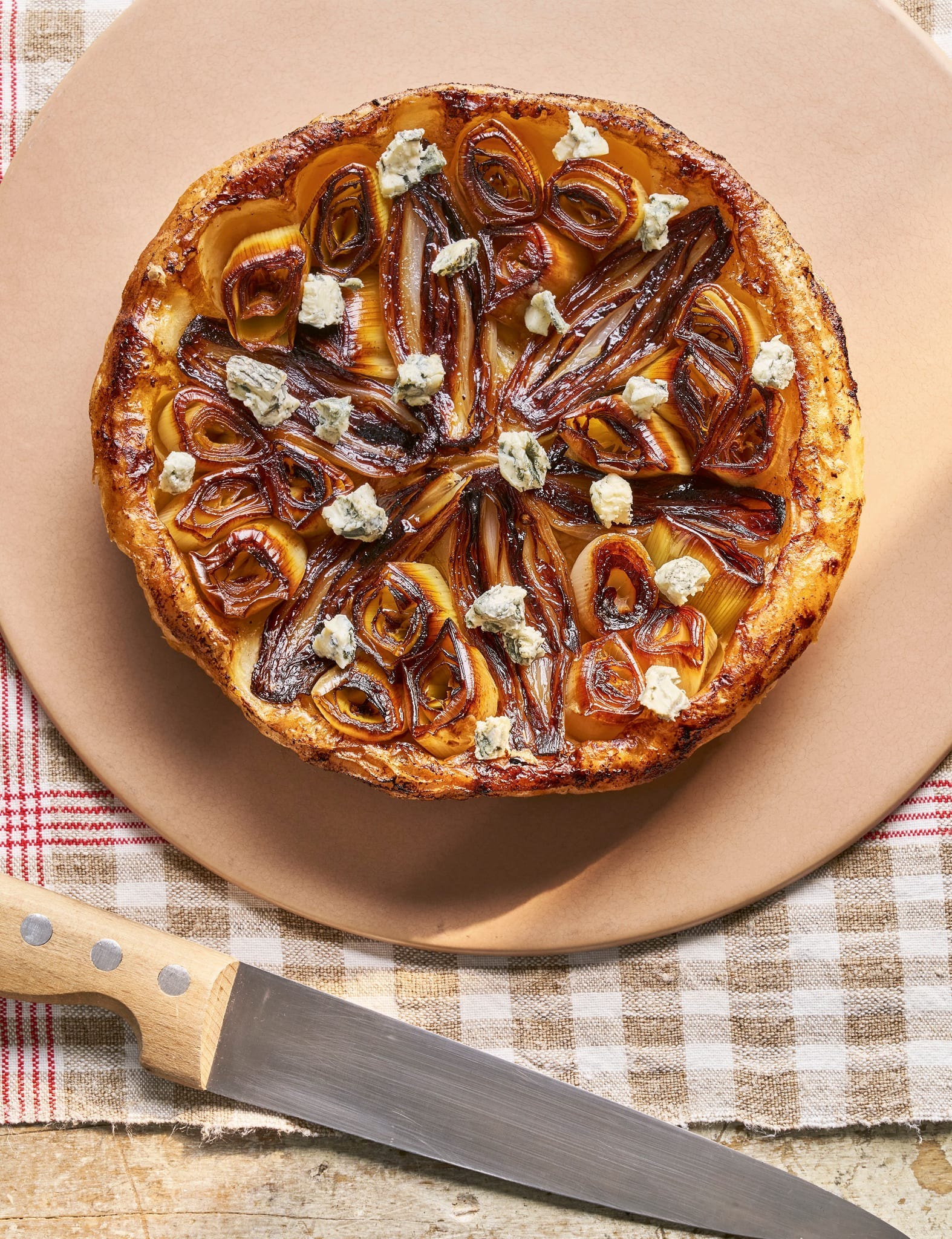
About this dish
Raymond Blanc created this savoury Tatin while working with Saint Agur and includes it in Simply Raymond: Kitchen Garden. He keeps the pastry ready-rolled and lets the vegetables provide the sweetness. Slowly colouring the shallots and leeks first gives them a golden surface before they bake beneath their pastry lid. Turning the tart out reveals the pattern underneath. The cheese goes on last, bringing its cool, creamy saltiness to the warm vegetables. Blanc prefers Saint Agur here, although he welcomes other blue cheeses.
The Tatin name belongs to the upside-down apple tart associated with sisters Stéphanie and Caroline at their hotel in Lamotte-Beuvron, Sologne. Legend tells of a busy hunting Sunday when Stéphanie forgot the pastry beneath her apples. She covered them with pastry instead, baked the tart and served it turned over. The guests enjoyed the result. Upside-down apple tarts already belonged to the wider Sologne and Orléanais tradition that the sisters helped popularise; Blanc borrows that successful reversal for his vegetables.
Recipe and cooking notes adapted from Raymond Blanc.